
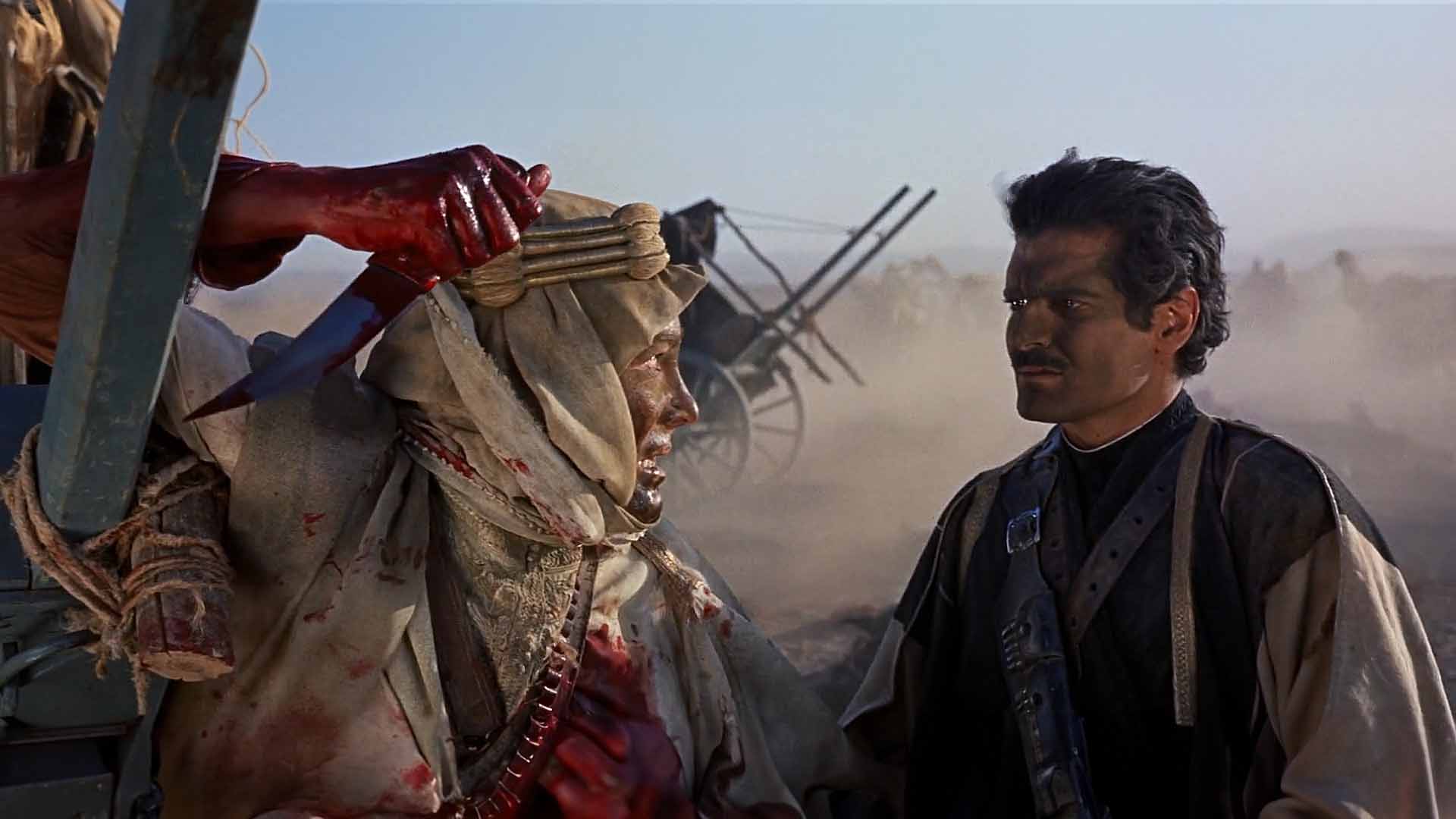
Even 62 years after its release, Lawrence of Arabia remains one of the greatest films of all time. It is still a benchmark for filmmakers and a staple in film studies worldwide.
But what is it about this film that makes it so visually compelling?
In this article, we’ll dive into the incredible cinematography that gives Lawrence of Arabia its iconic look, examining the technical innovations, artistic decisions, and the sheer dedication that brought this epic to life.
Watch the video:

Super Panavision 70 and the Grand Vision
One of the first things that stands out about Lawrence of Arabia is its stunning aspect ratio of 2.20:1. This wide ratio was made possible by the Super Panavision 70 technology, which uses 65mm film stock on a 65mm camera.
Unlike the more familiar CinemaScope, which relies on anamorphic lenses to compress the image, Super Panavision 70 utilized spherical lenses, providing a natural, undistorted image.
After shooting on 65mm film stock, the footage is printed onto 70mm film. The extra 5mm is used for the 4-strip magnetic soundtrack. This process allows for a detailed and expansive image, crucial for capturing the vastness of the Arabian desert and the epic scope of T.E. Lawrence’s journey.
A lot of people confuse 65mm and 70mm. Here’s the difference between 65mm and 70mm:

The 70mm comes from the answer print, which is what people see in theaters. 65mm is what the film is shot on. As you can see, the 70mm frame works out to be smaller than 65mm!
Why is it called a 70mm film though? Marketing. Theaters and chains liked to market the larger number, too.
The Lenses behind the Iconic Imagery
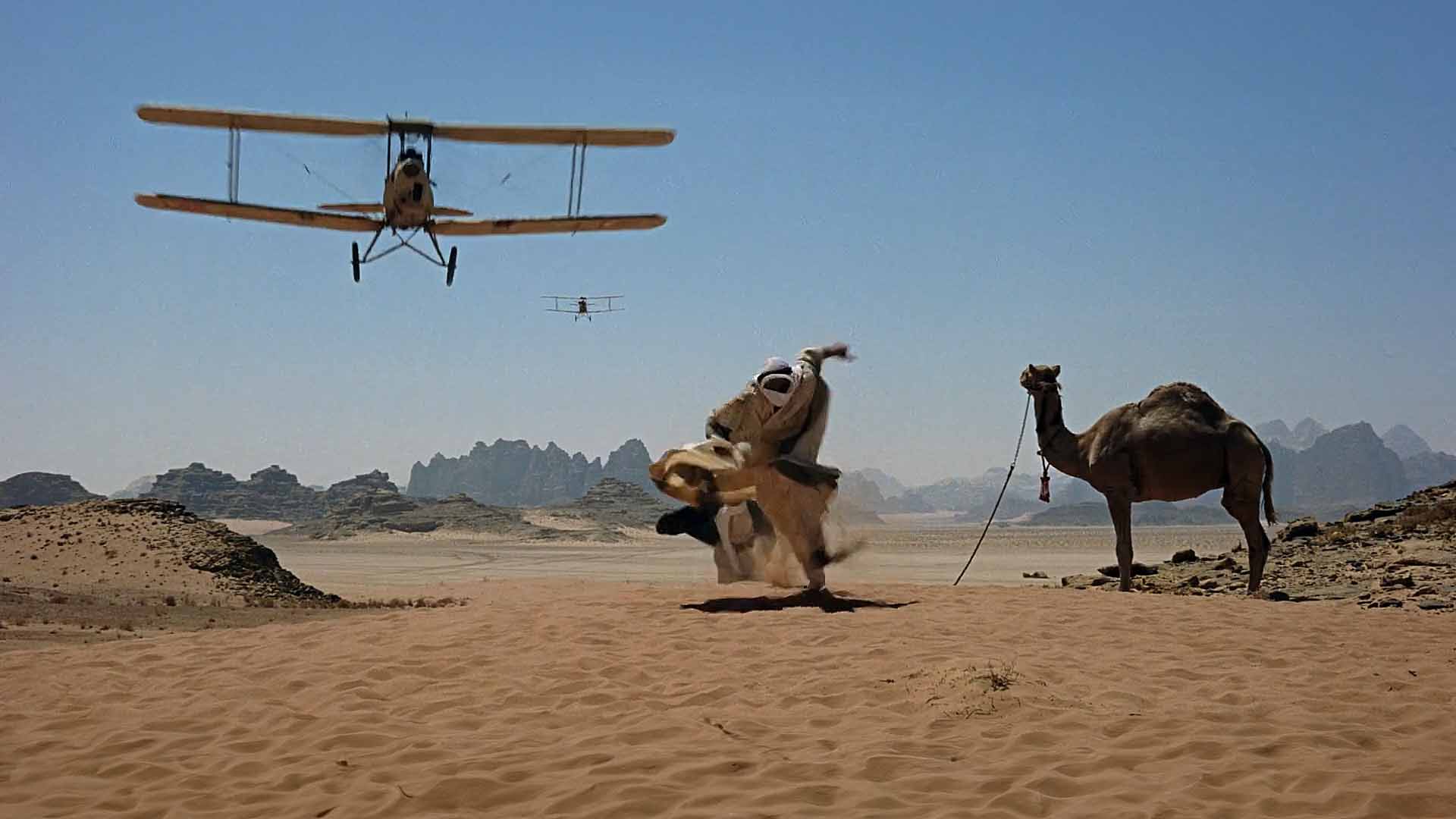
The cinematography of Lawrence of Arabia wasn’t just about the film stock; it was also about the lenses.
The production primarily used Super Panavision 70 lenses, known for their ability to handle wide aspect ratios while maintaining sharpness across the frame. Here’s the current lineup:
| Focal Length | T-Stop | Close Focus (in) |
|---|---|---|
| 28 | 2.8 | 24 |
| 35 | 2.8 | 15 |
| 50 | 2 | 36 |
| 50 | 2 | 24 |
| 75 | 2.8 | 33 |
| 100 | 2.5 | 39 |
| 150 | 3 | 33 |
As you can see, they open up real nice for 65mm!
However, cinematographer Freddie Young shot with a small aperture, T5.6 or higher, to achieve a greater depth of field. This ensures that both the foreground and background remained in sharp focus.
If you want to know the issues related with deep focus cinematography, check out this video and article:
They also had custom lenses designed by Panavision. One of the most notable pieces of equipment was the custom Sphero Panatar 450mm T8 lens, created specifically for the unforgettable mirage scene where Sherif Ali (Omar Sharif) emerges from the desert haze.
This long lens compressed the vast distances, making Ali appear to materialize slowly from the heat waves, a visual that has become one of the most iconic in cinema history.
Lighting, Composition, and the Harsh Realities
Director David Lean was obsessed with the scale and detail of his films, and Lawrence of Arabia was no exception. He wanted the desert to be more than just a backdrop; he wanted it to be a character in its own right.
The natural light of the desert, with its deep shadows and brilliant highlights, was definitely exploited as back light and key light in many scenes. However, with the film stock they used, they had to augment with powerful light fixtures.
The film was shot on Kodak Eastman 50T 5250 stock, which translates to an ISO of around 100 (roughly).
This low sensitivity meant that the shadows in the desert scenes often plunged into deep blackness, a limitation that was carefully managed with powerful fill lighting and the natural desert bounce.
And, the payoff was a rich, detailed image that conveyed the harsh, unforgiving nature of the desert.
Lean’s approach to composition was also influenced by technical limitations. The Super Panavision 70 format sometimes caused a “flutter” effect during projection, where parts of the image could blur or jitter, especially during horizontal movements.
To mitigate this, Lean often blocked scenes with diagonal actor movements, which helped to avoid this issue while maintaining the flow of the action.
This attention to detail extended to the use of long dolly tracks and cranes to capture the epic chase scenes, allowing for smooth, steady shots that enhanced the film’s grandeur.
The Influence of John Ford: Echoes of a Legend
David Lean’s inspiration for the visual style of Lawrence of Arabia came in part from John Ford’s 1956 classic, The Searchers.
Lean admired Ford’s ability to use the landscape as a storytelling device, particularly in Monument Valley, which Ford made famous. Several scenes in Lawrence of Arabia, such as Sherif Ali’s entrance at the well, directly recall Ford’s work. The way Lean framed the vast, empty desert to emphasize isolation and scale was a nod to Ford’s mastery of the American West.
If you want to know the real influence and power of John Ford, watch this video:
The Color Palette and Production Design
Lean’s use of costumes also played a significant role in the film’s visual language.
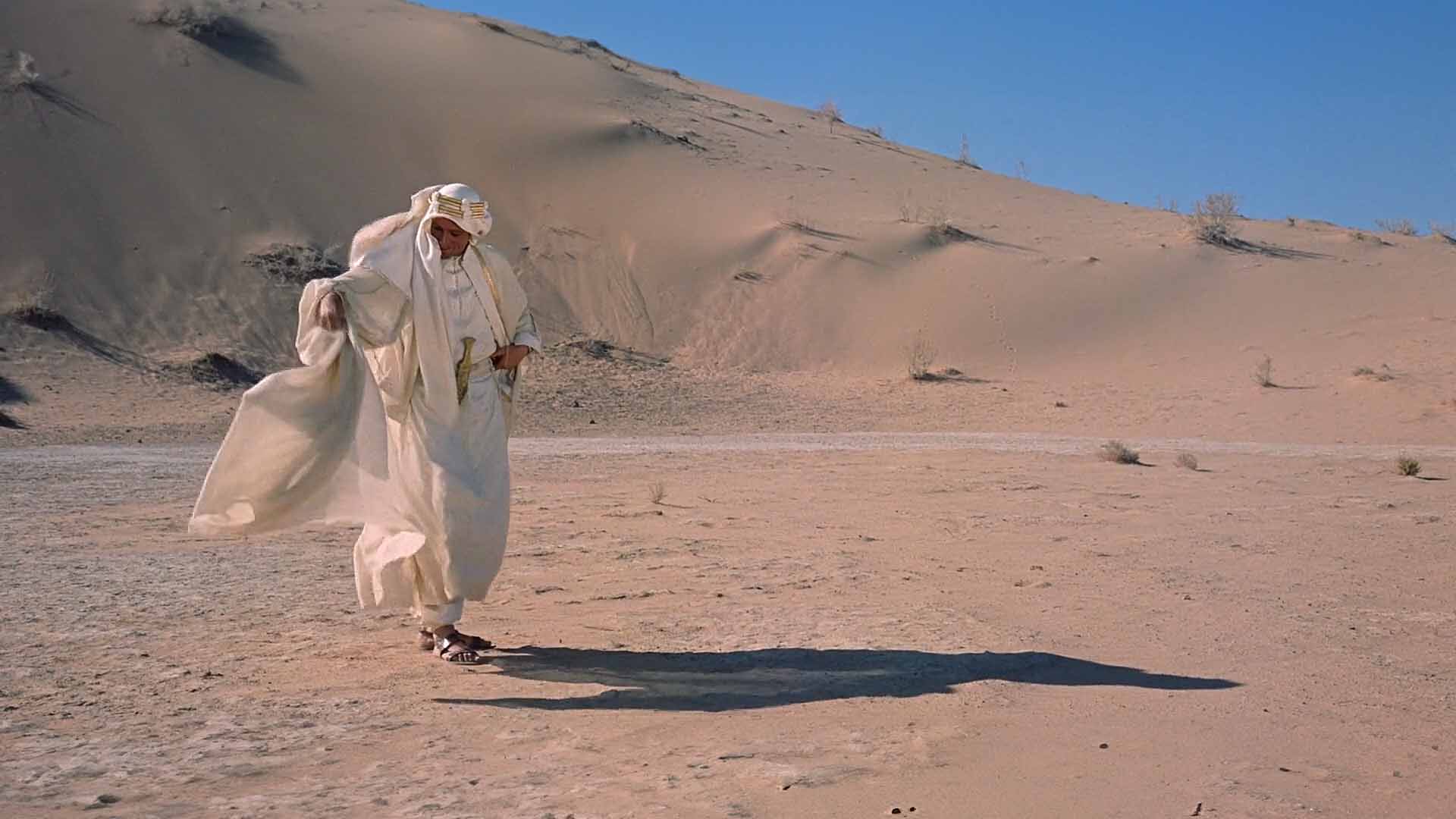
Lawrence’s white robes, which stand out starkly against the golden sands, symbolize his outsider status and purity. As the film progresses, these robes become stained and worn, reflecting Lawrence’s moral decay and the erosion of his idealism. The contrast between the whiteness of his robes and the harshness of the desert visually represents his internal struggle to maintain his ideals.
The color scheme in Lawrence of Arabia was another carefully controlled aspect of its cinematography. Lean and Young followed a consistent color palette that highlighted the golden sands and deep blue skies of the desert, creating a visual coherence that is both striking and immersive.
The 4K restoration of the film has helped preserve these vibrant colors, ensuring that modern audiences can still experience the film’s visual richness as it was intended.
The film’s score, composed by Maurice Jarre, also contributed to the immersive experience, winning an Academy Award and becoming one of the most celebrated film scores of all time.
The editing, too, is legendary. Who can forget the iconic match cut from Lawrence blowing out a matchstick to the blazing desert sun? Check out my video of the best film edits to see where it is placed:
So, why does Lawrence of Arabia look the way it does?
It’s the result of a perfect storm of artistic vision, technical innovation, and sheer dedication. David Lean and his team created a film that set a new standard for epic filmmaking, influencing countless directors, from Steven Spielberg to Ridley Scott.
The film’s unique blend of grandeur and intimacy, its use of landscape, light, and composition, remains unparalleled.
Even today, the cinematography of Lawrence of Arabia continues to be a benchmark in the industry, its influence seen in films across genres and generations. It’s a testament to the power of visual storytelling, showing that when technology, artistry, and narrative align, the result is nothing short of cinematic history.
What do you think?

I watched it on Vision Pro: utterly sublime.
Thanks for sharing. What app did you use to play it on the Vision Pro?