

Watch the video analysis of Orson Welles’ “Sanchez’s apartment scene” in Touch of Evil:
I have converted the PDF into a blog post so everyone can access it.
Notes about the scene:
- Scene length: about 14 minutes including insert scene
- Scene length (just the one-take part): 12 minutes, approx.
- Total number of shots: 3 – one take.
- Time taken to shoot: 40 minutes (the rest of the day went in planning and rehearsing).
- Most of Touch of Evil was shot with a 18.5mm Angenieux Retrofocus wide angle prime lens. Here’s a quote from an old interview:
It’s not that I prefer the 18.5mm lens. I’m simply the only one who’s explored its possibilities. I don’t prefer improvisation. Quite simply, no one was working with it for a long time. It’s not a question of preference. I occupy positions that aren’t occupied because, in this young medium of expression, it’s a necessity.
– Orson Welles, 1958 Cahiers du Cinéma Interview
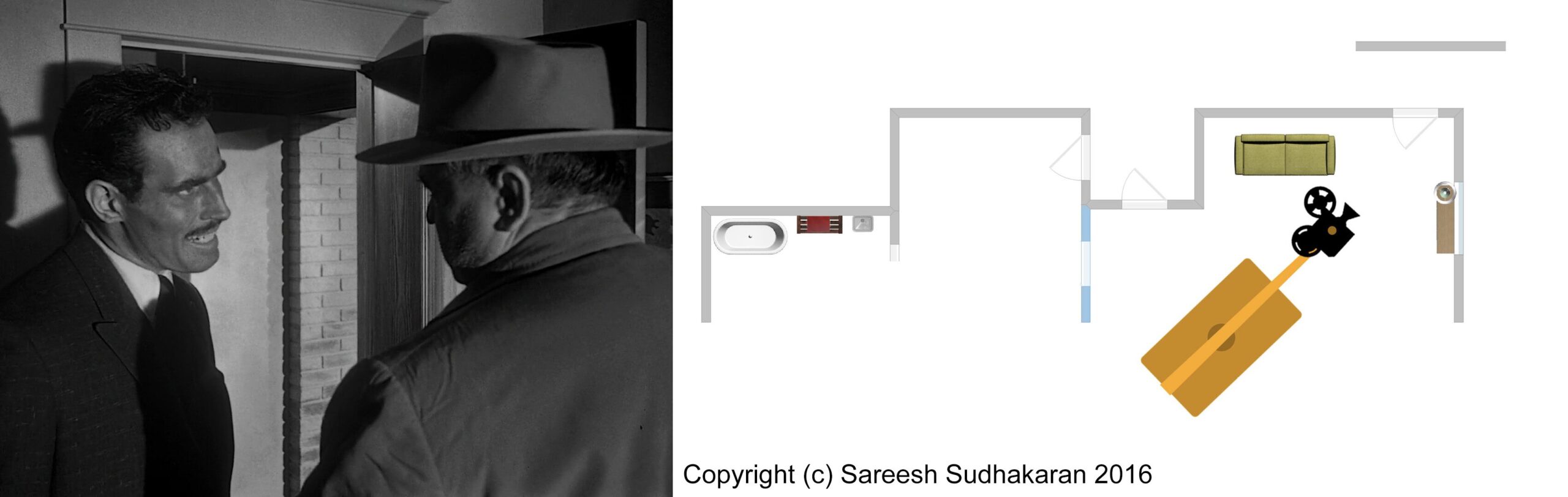
Analysis of the Crane Marks and Lighting positions in the Sanchez’s apartment scene, Touch of Evil
Important: The apartment plan isn’t to scale. And, the exact crane movements, angles and lighting positions are all guesstimates. This is for informational purposes only. Please do not quote or use it as a serious or authentic study or resource. I will only be covering sections one and three.
Section One
There are 17 marks (in the video I mistakenly wrote 19) in this section:
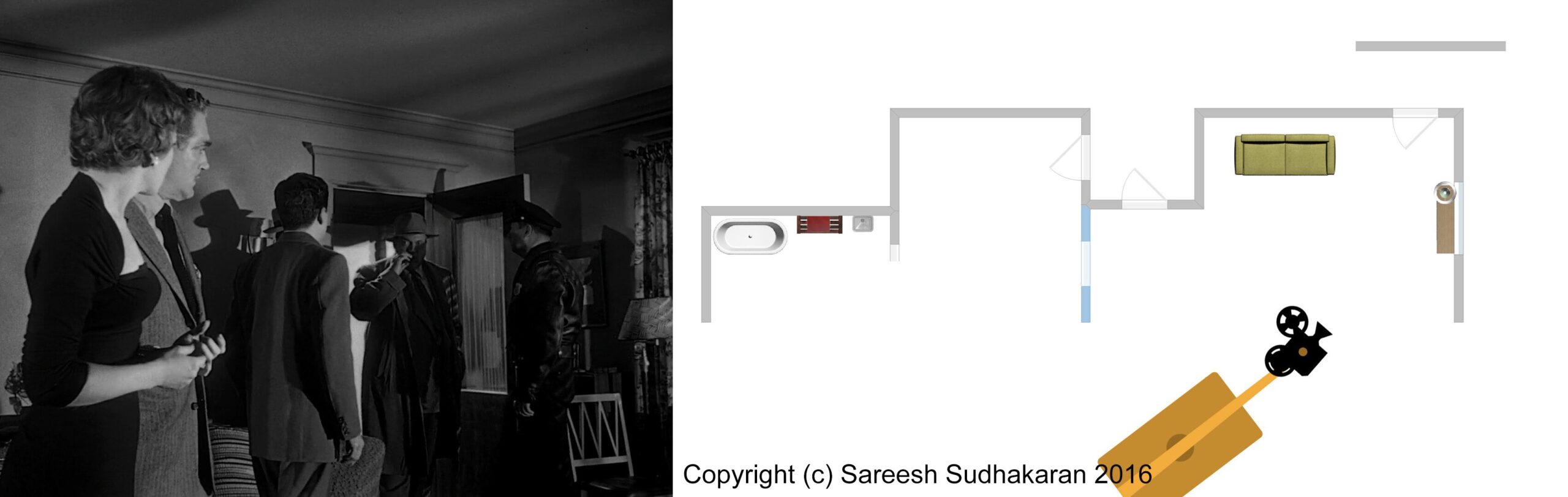
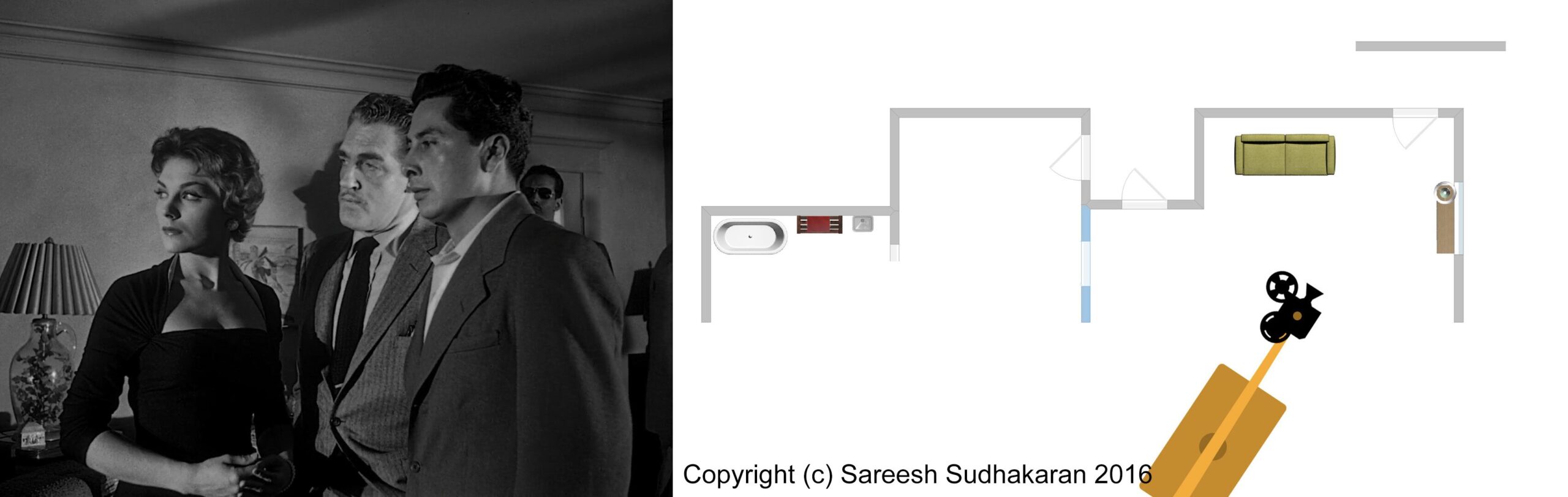
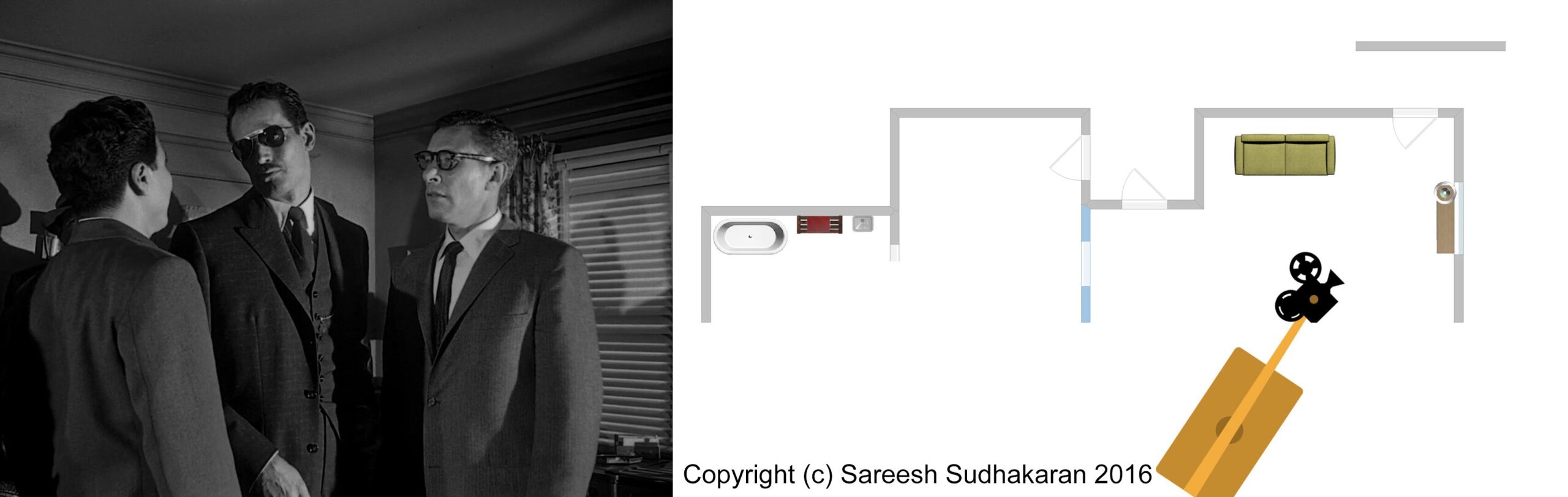
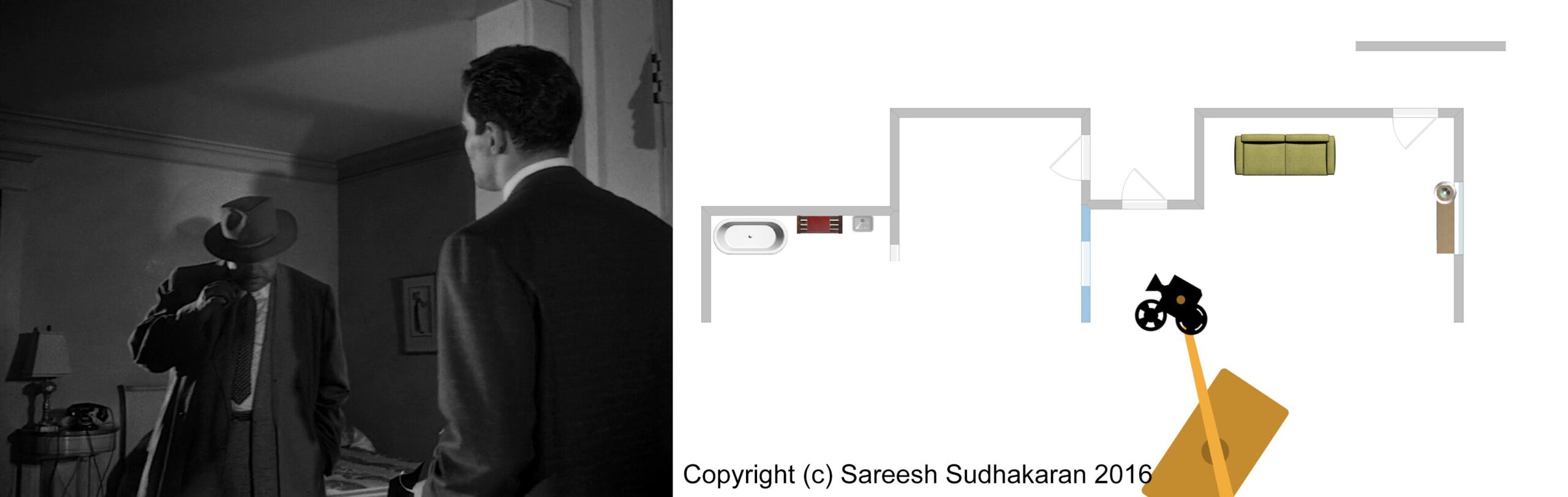
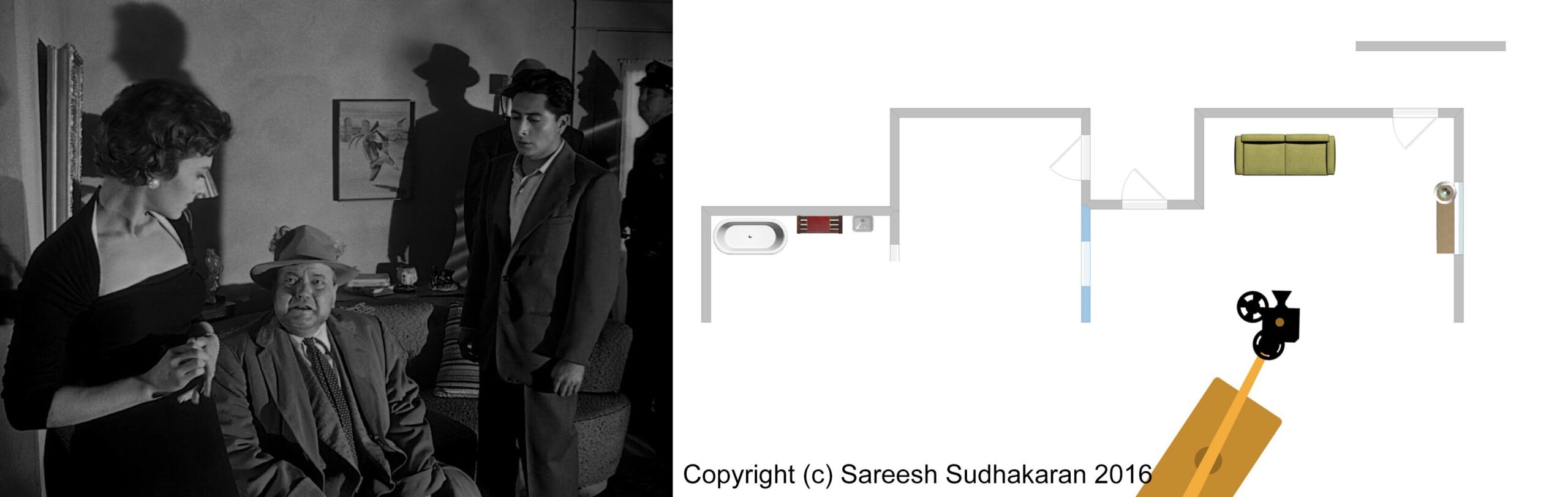
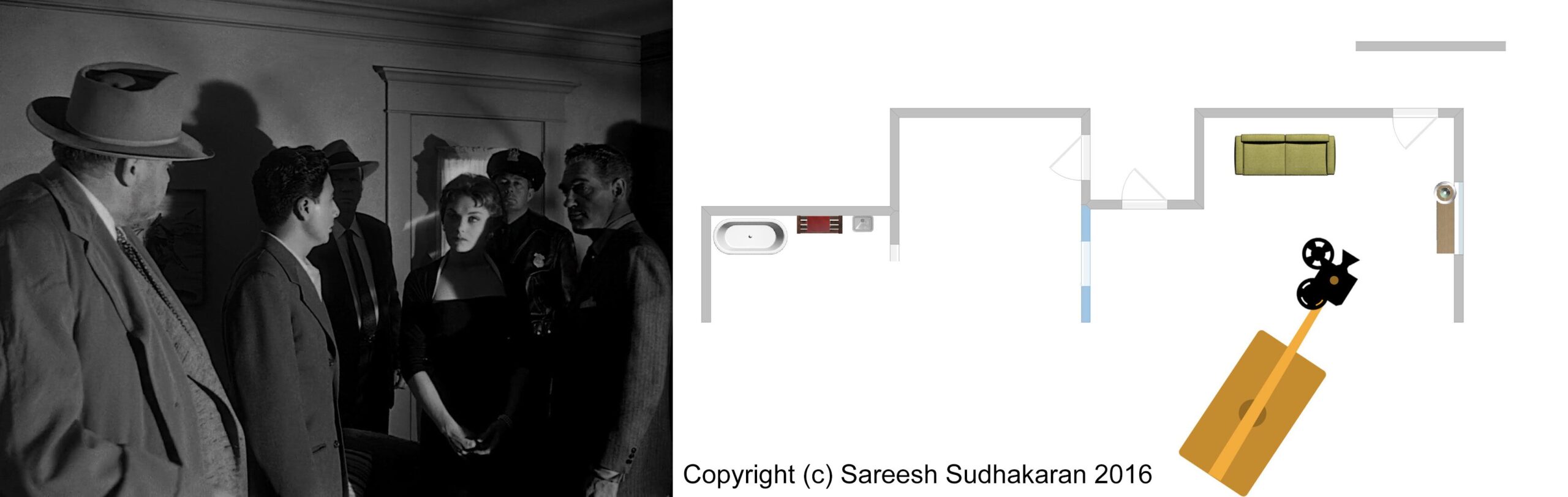
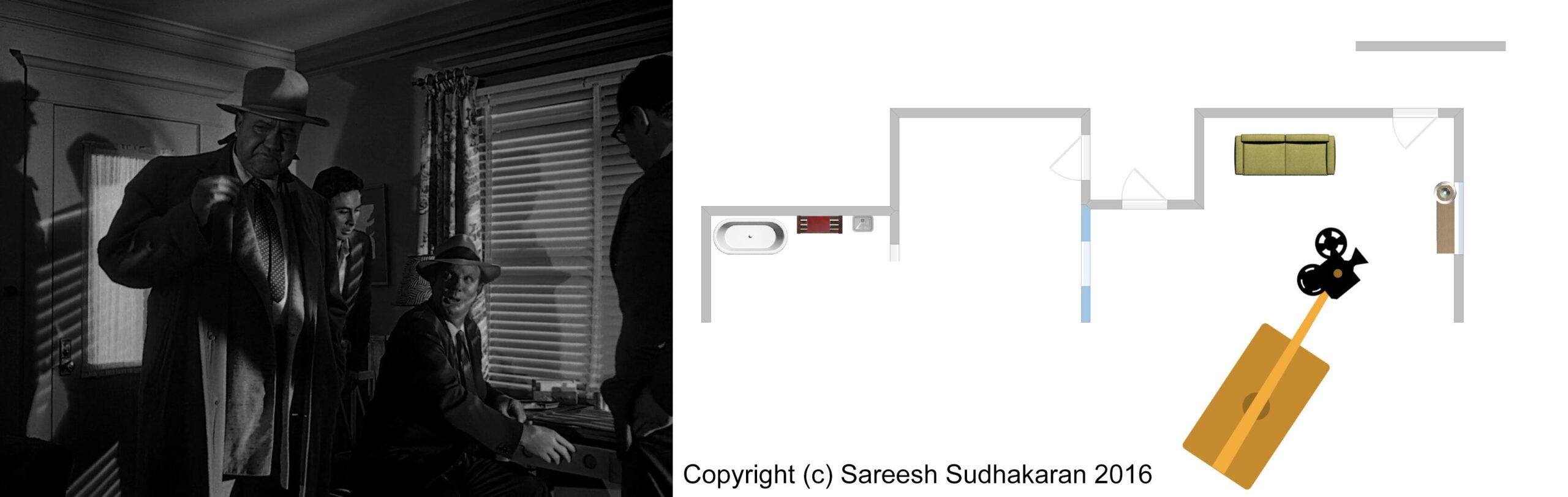
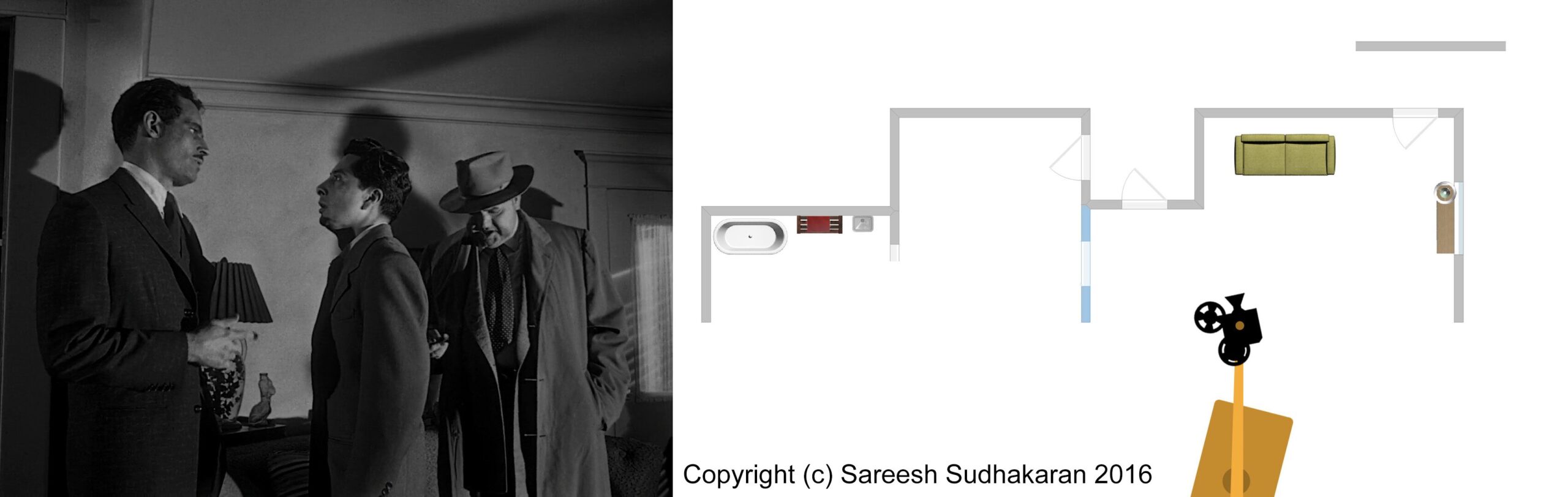
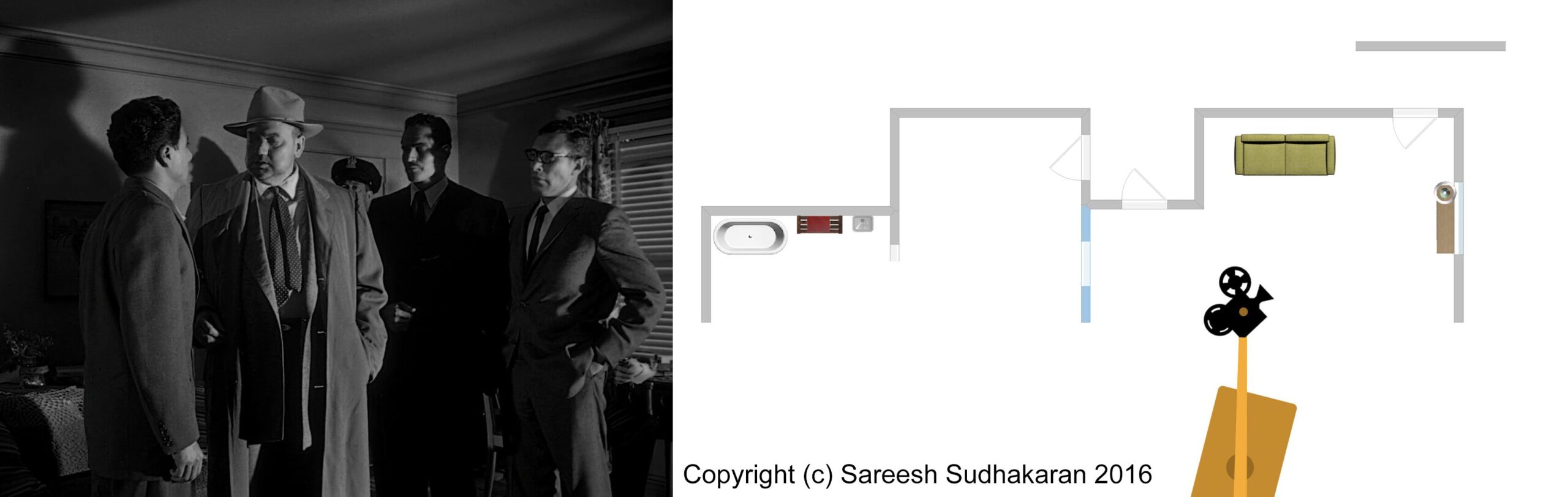
From here on the dolly and crane must “crab” to the left:
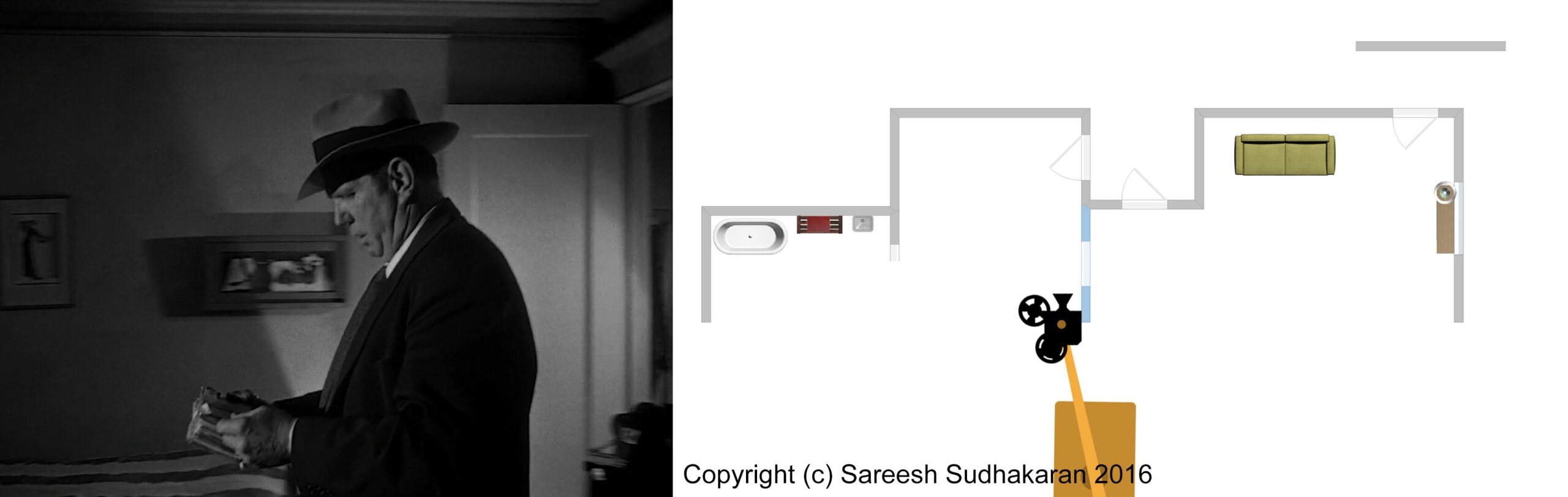
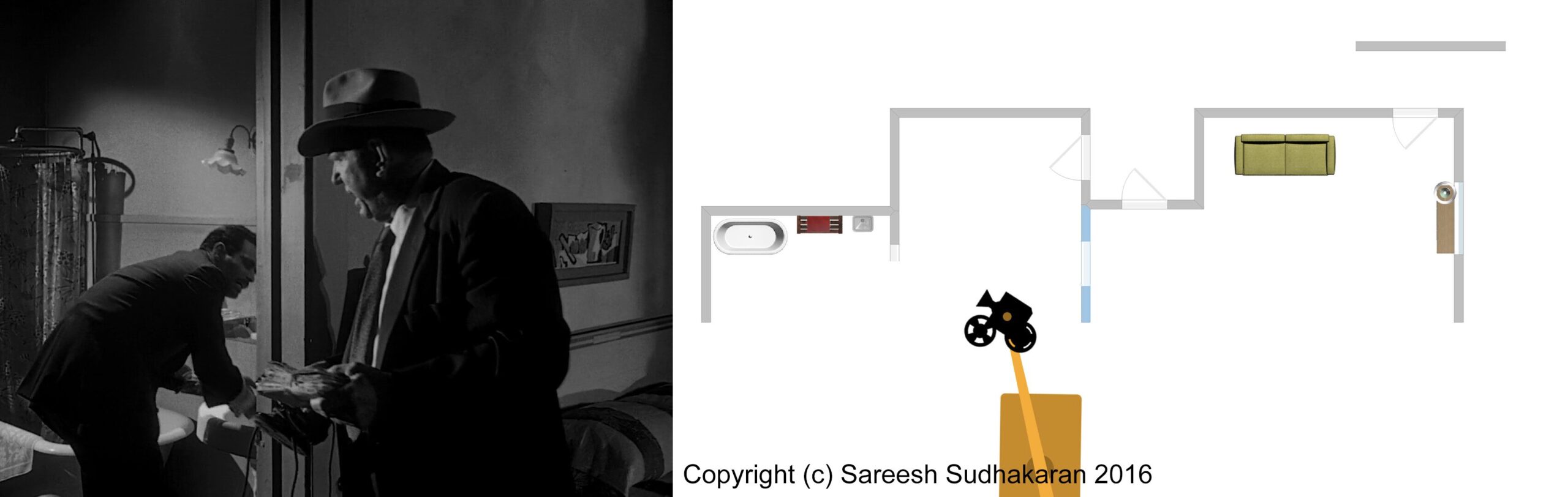
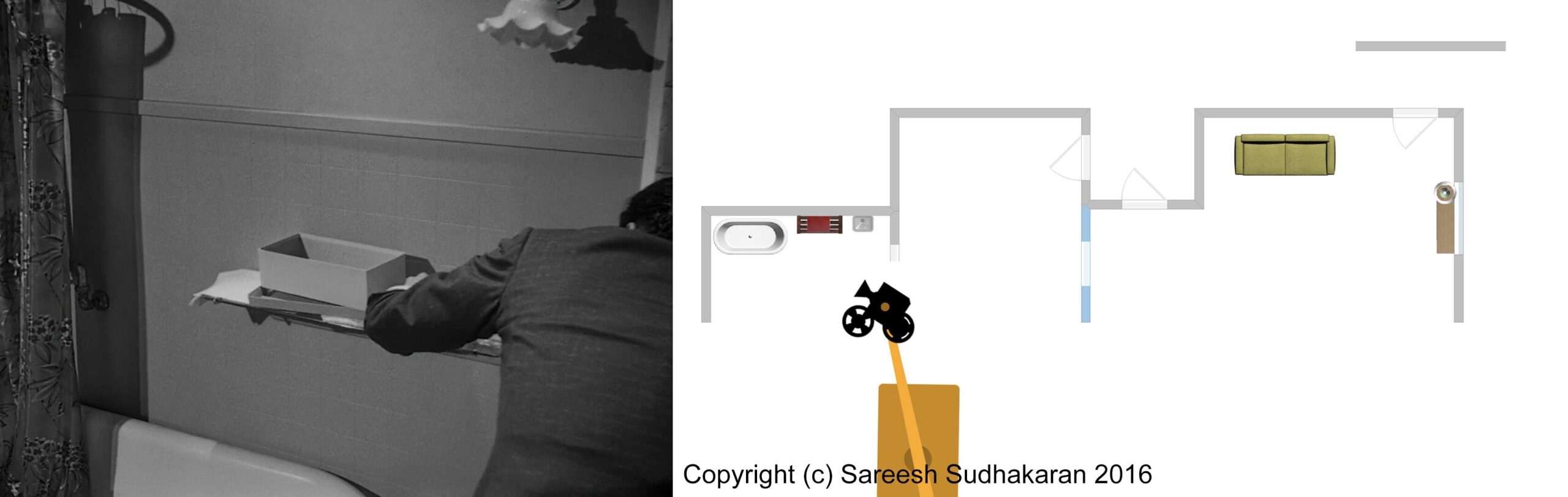
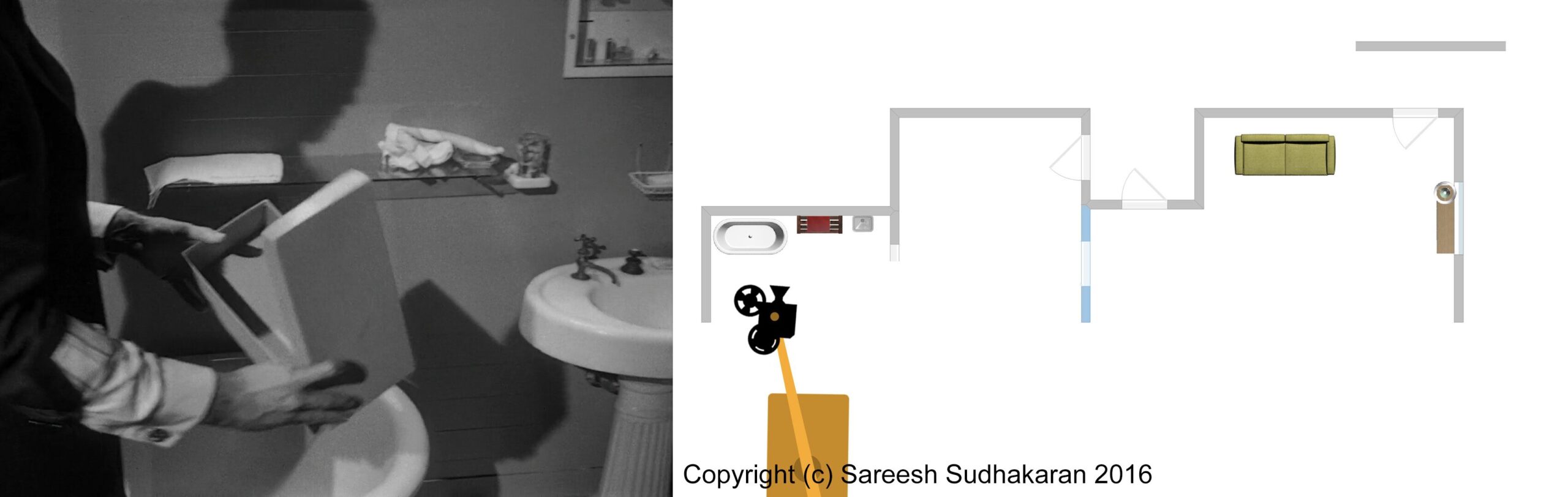
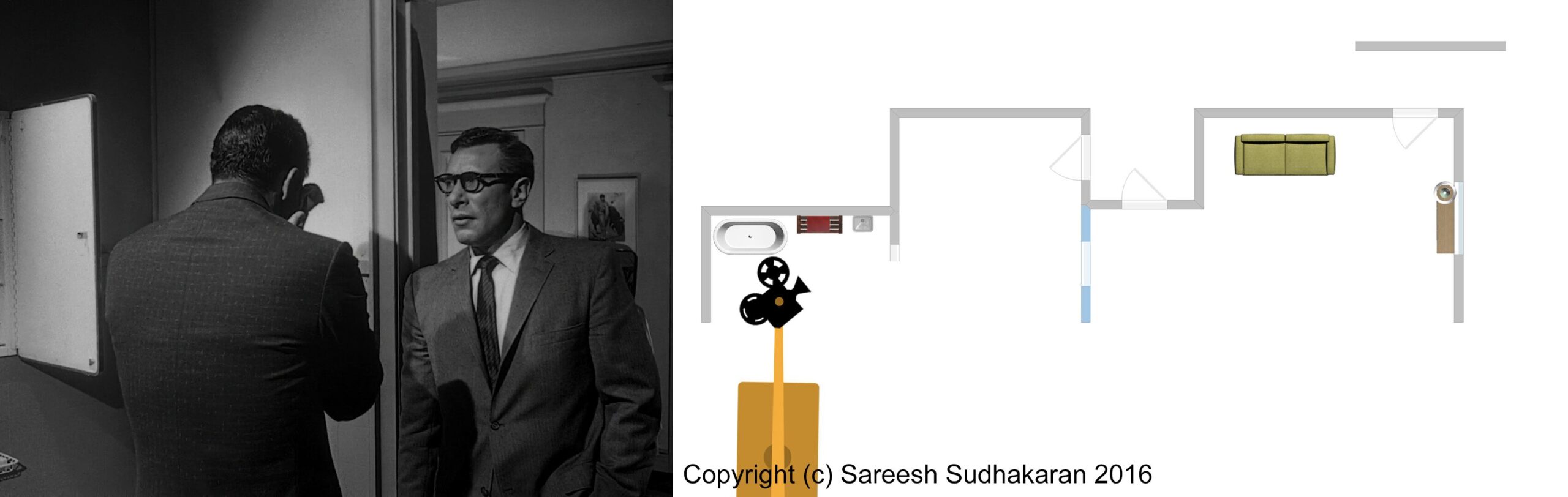
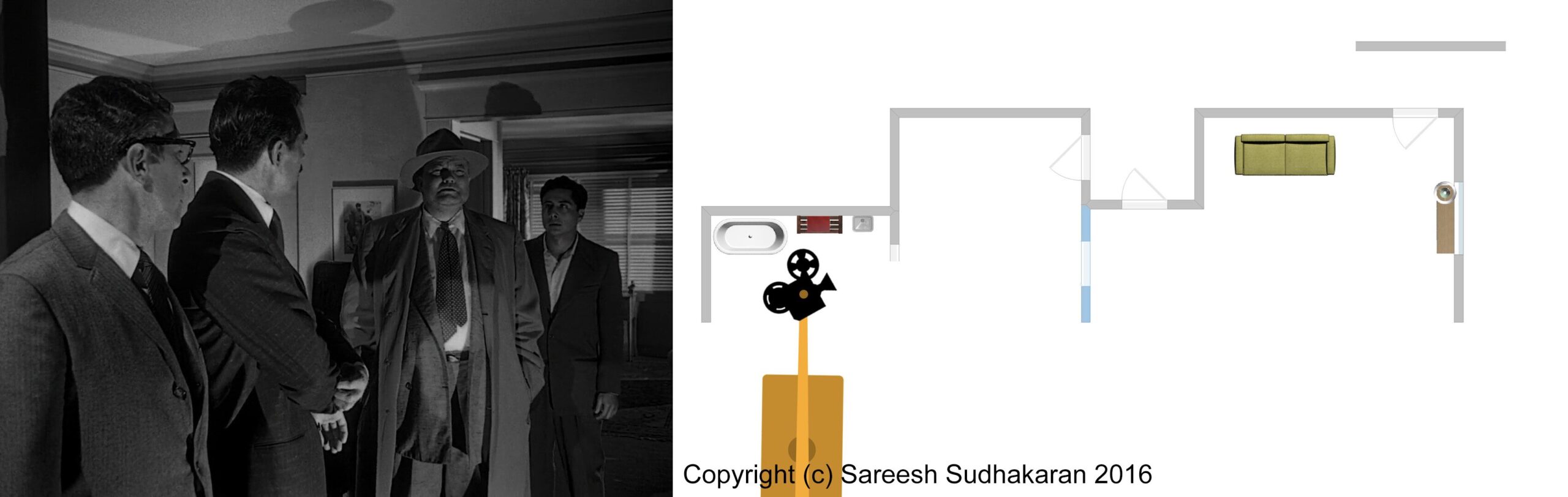
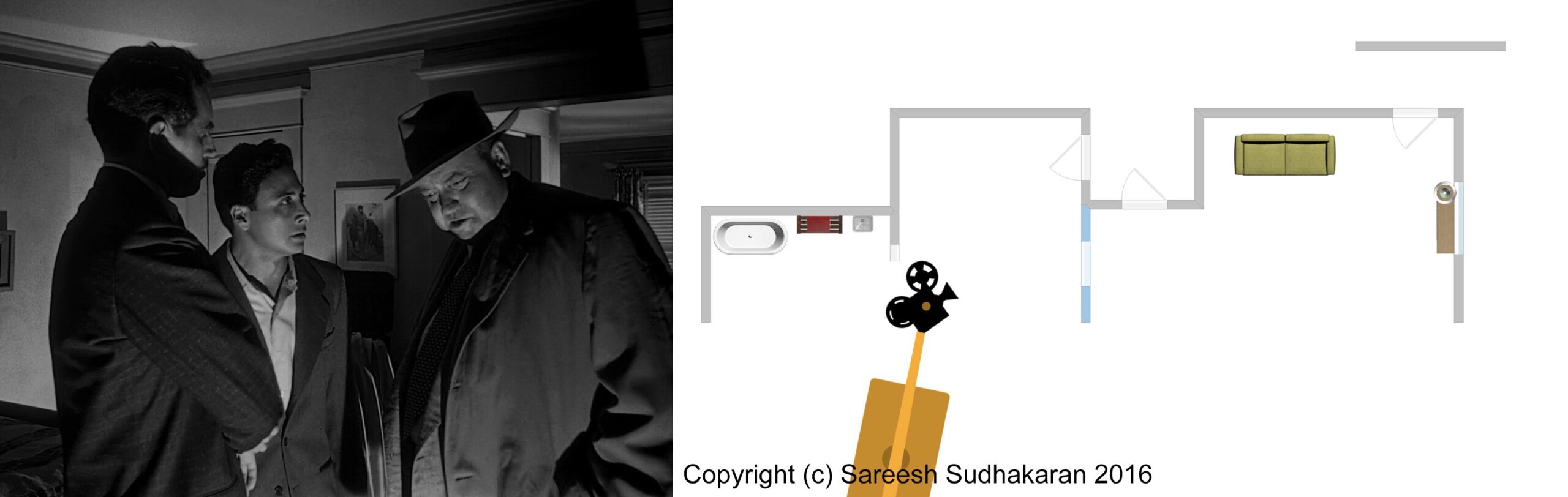
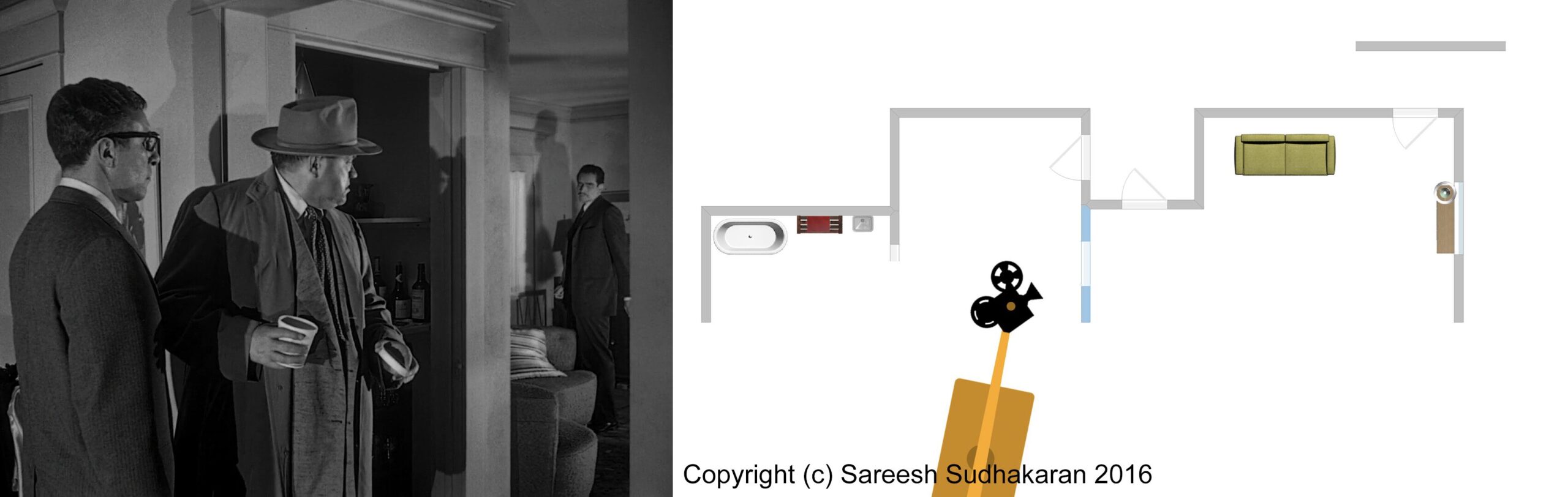
The movement is basically in a Y-pattern. So, the crane (dolly) had to have a crab movement (sideways). I could be wrong here.
The camera operator John Russell sits on the crane operating the angle of the camera. The key grip moves the crane arm and positions it precisely.
Section Three
There are only 8 marks in this section:
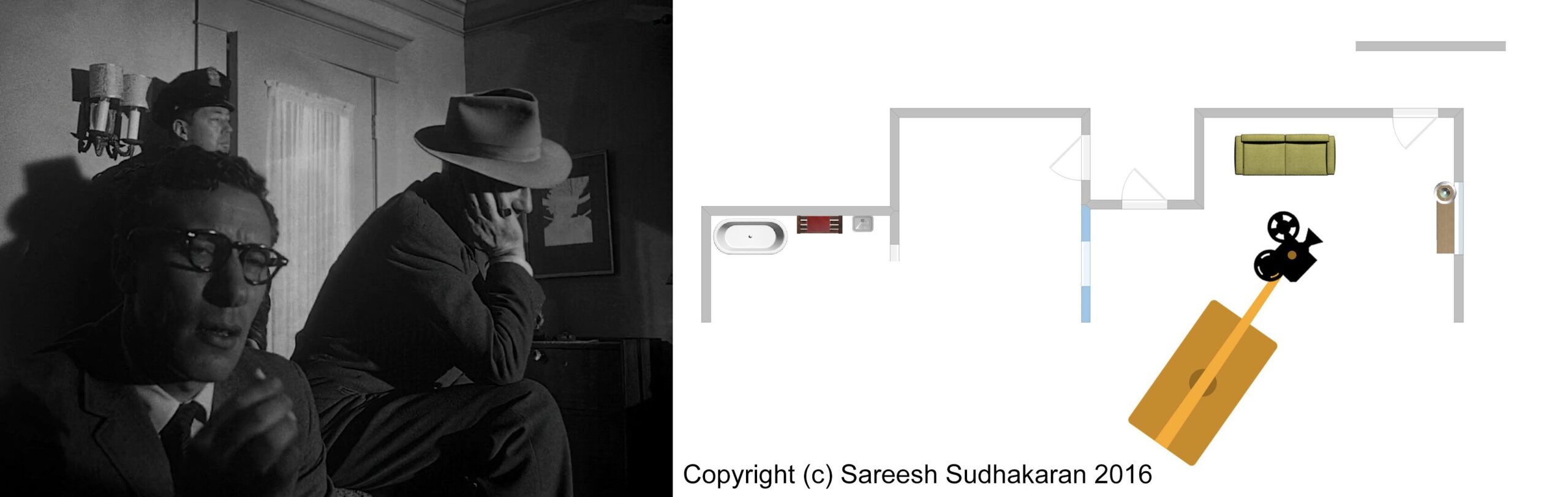
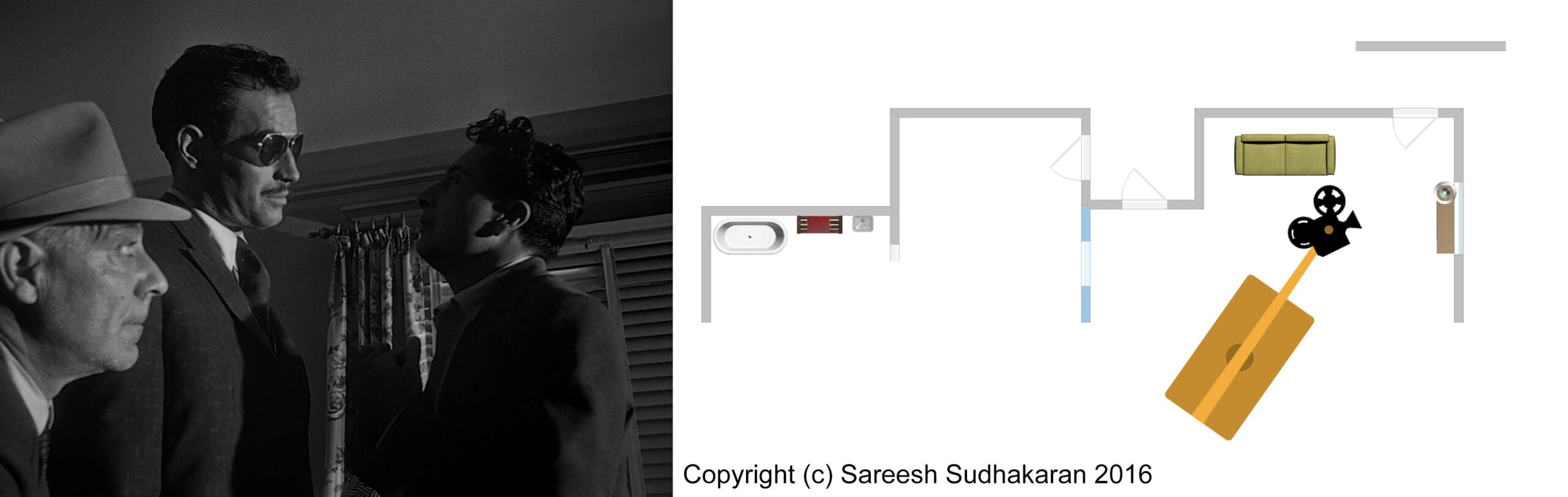
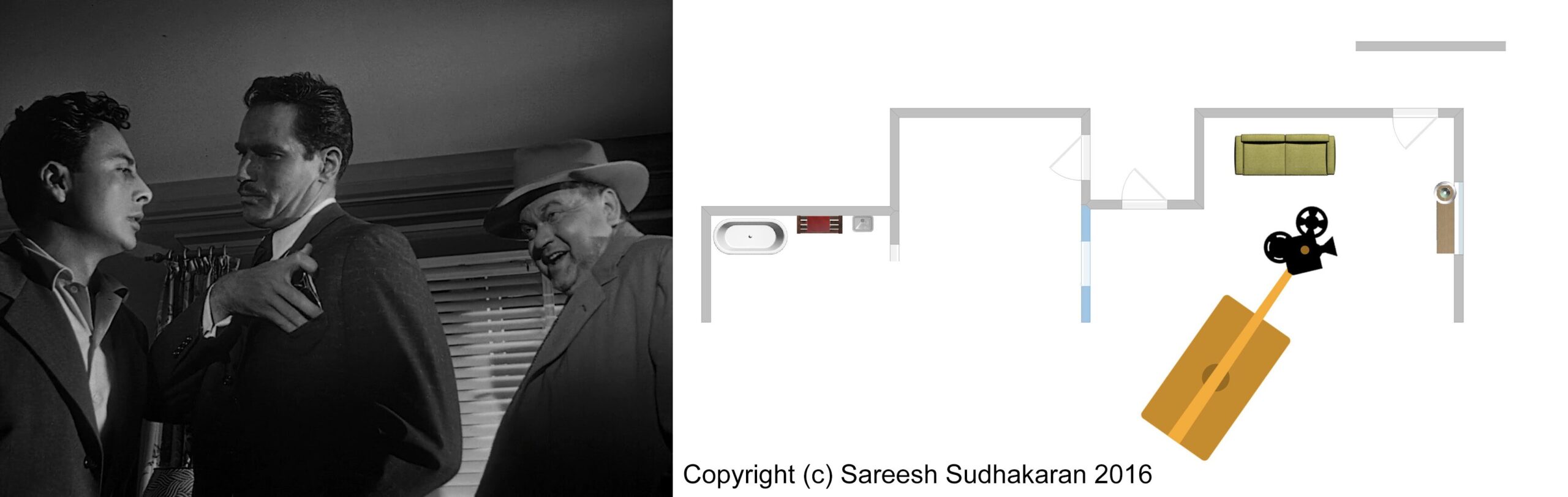
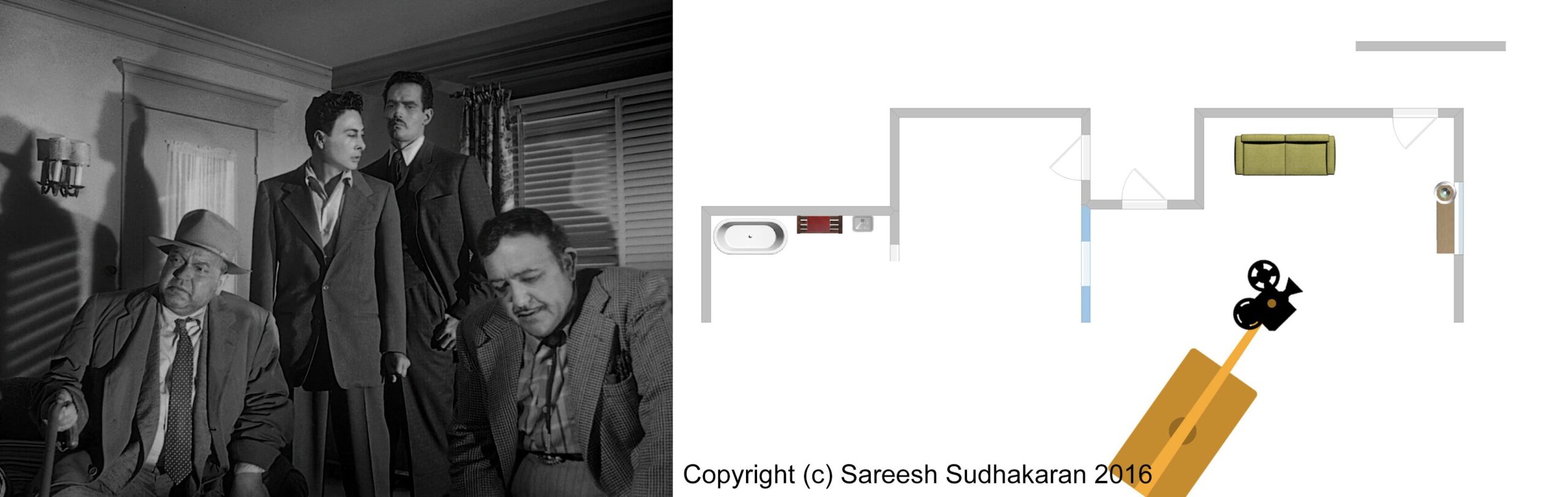
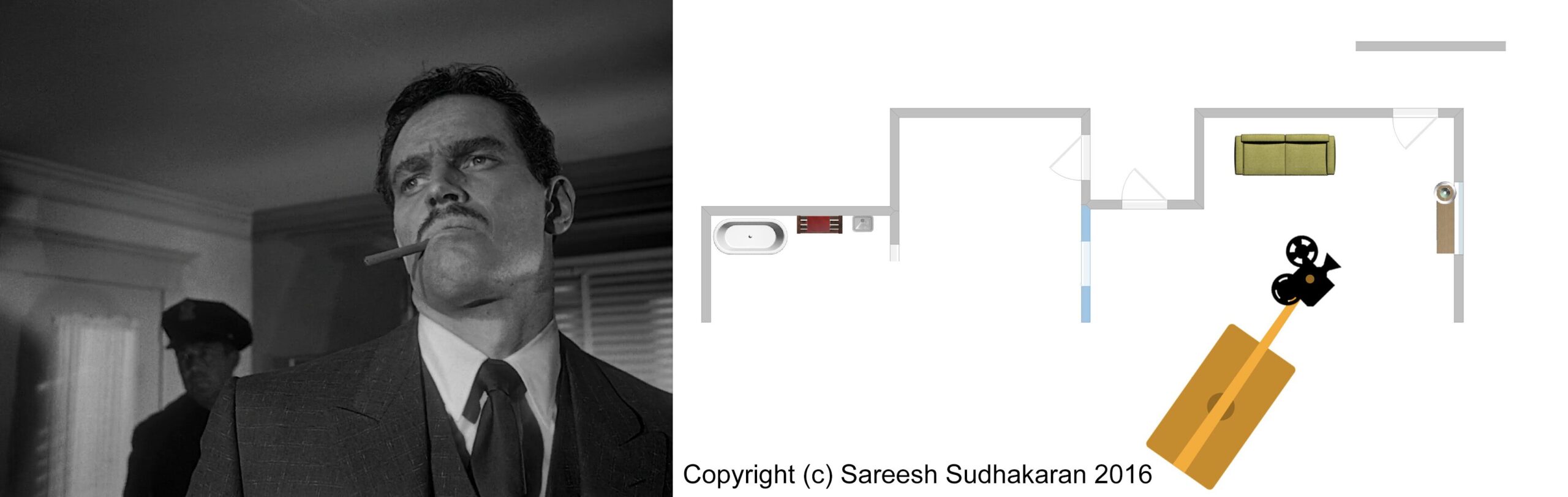
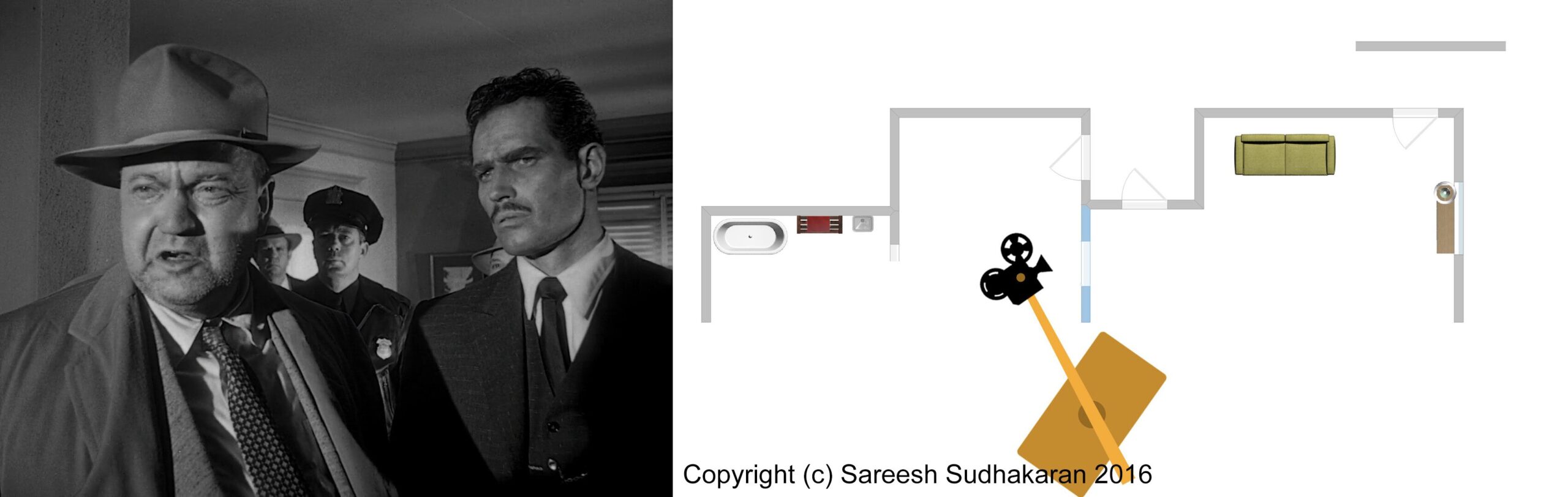
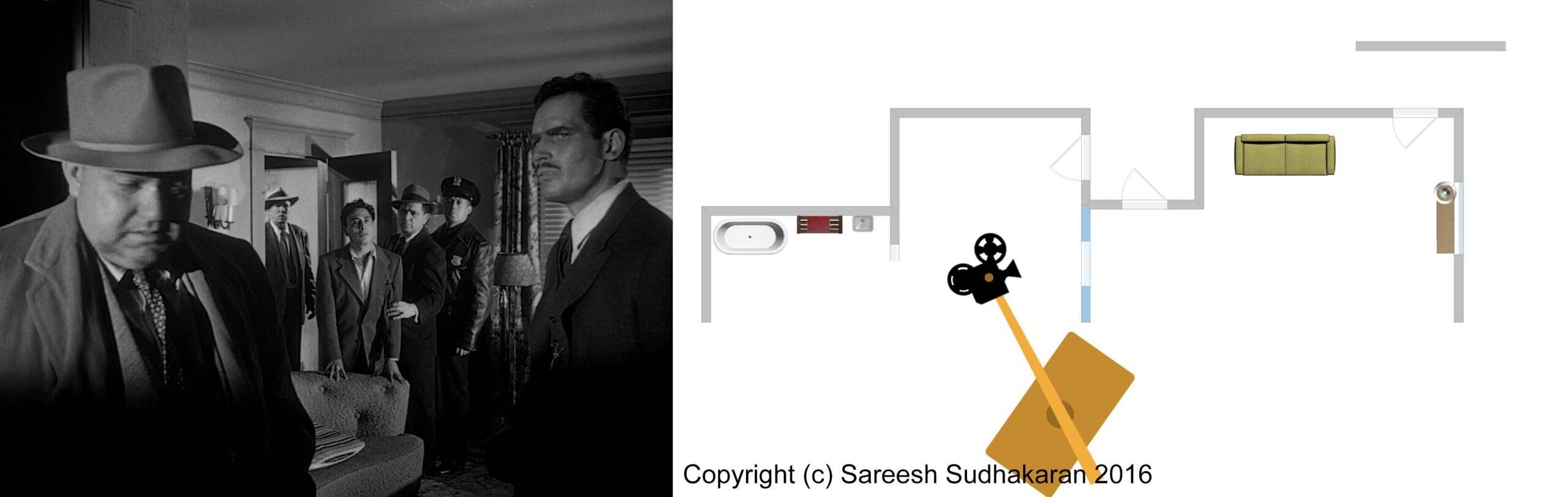
Positions of lighting fixtures
I counted a total of 15 lighting fixtures:
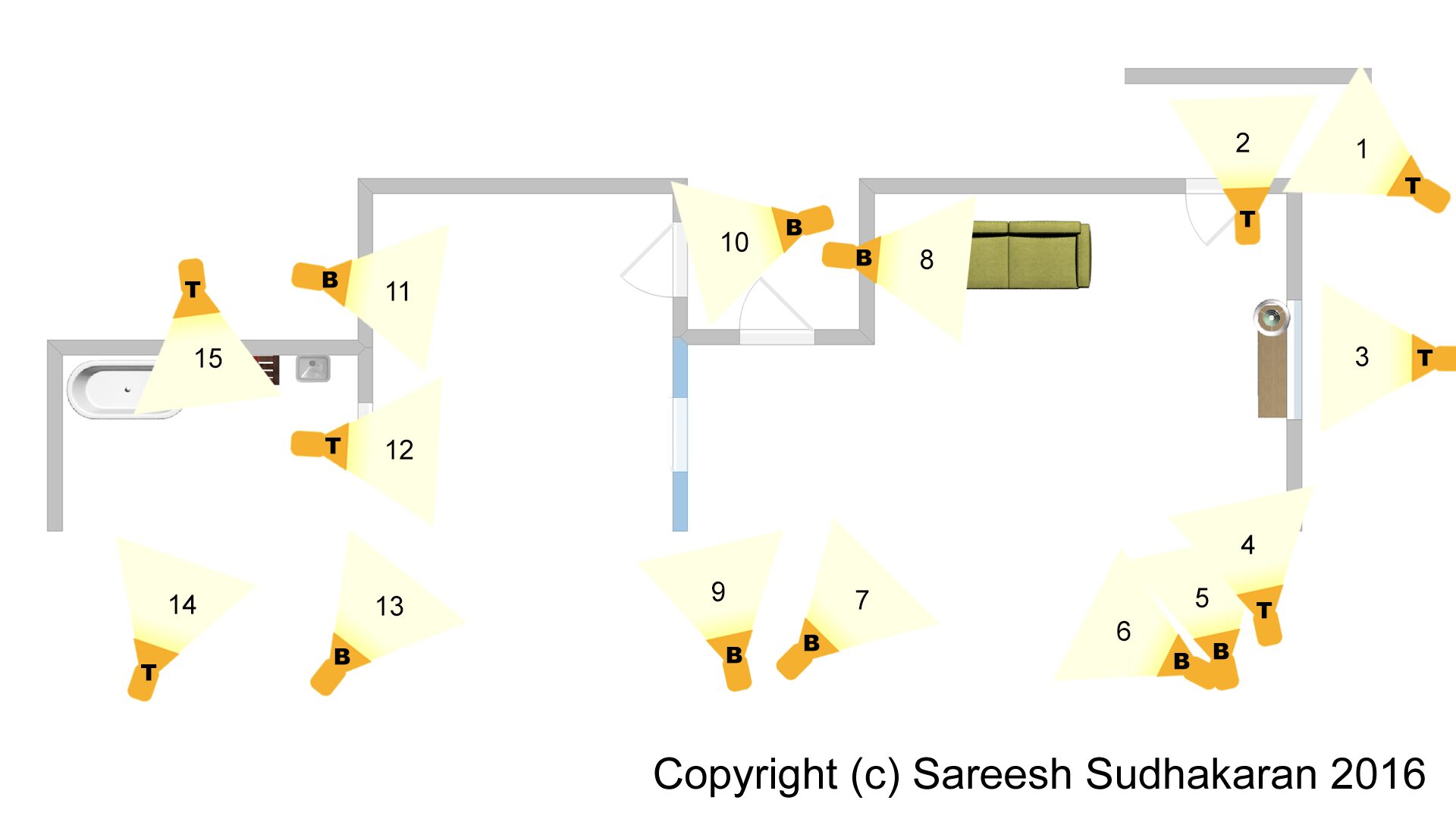
Note 2: The hard lights are possibly fresnels, due to the hard shadows they created.
The number and possible uses of lights:
- Exterior wall, to simulate daylight
- Wall and bounce for shade over the door
- This could be one or two lights, for the shades
- This is the Gobo light for the blinds-pattern on the wall
- Hard light, key
- Hard light, key
- Fill light, possibly open face – possibly moved in closer for the second section
- Hard light, key
- Open face light, possibly switched on and off sometime
- The ‘mystery’ light
- Fill light
- Fill light
- Hard light, key
- Key light for the bathroom
- Smaller top light to simulate a bulb on the wall.
I covered the “Sachez’s Apartment” scene because it’s a scene that slips under the radar. You don’t notice it’s a one-take scene, unlike the opening scene of Touch of Evil:
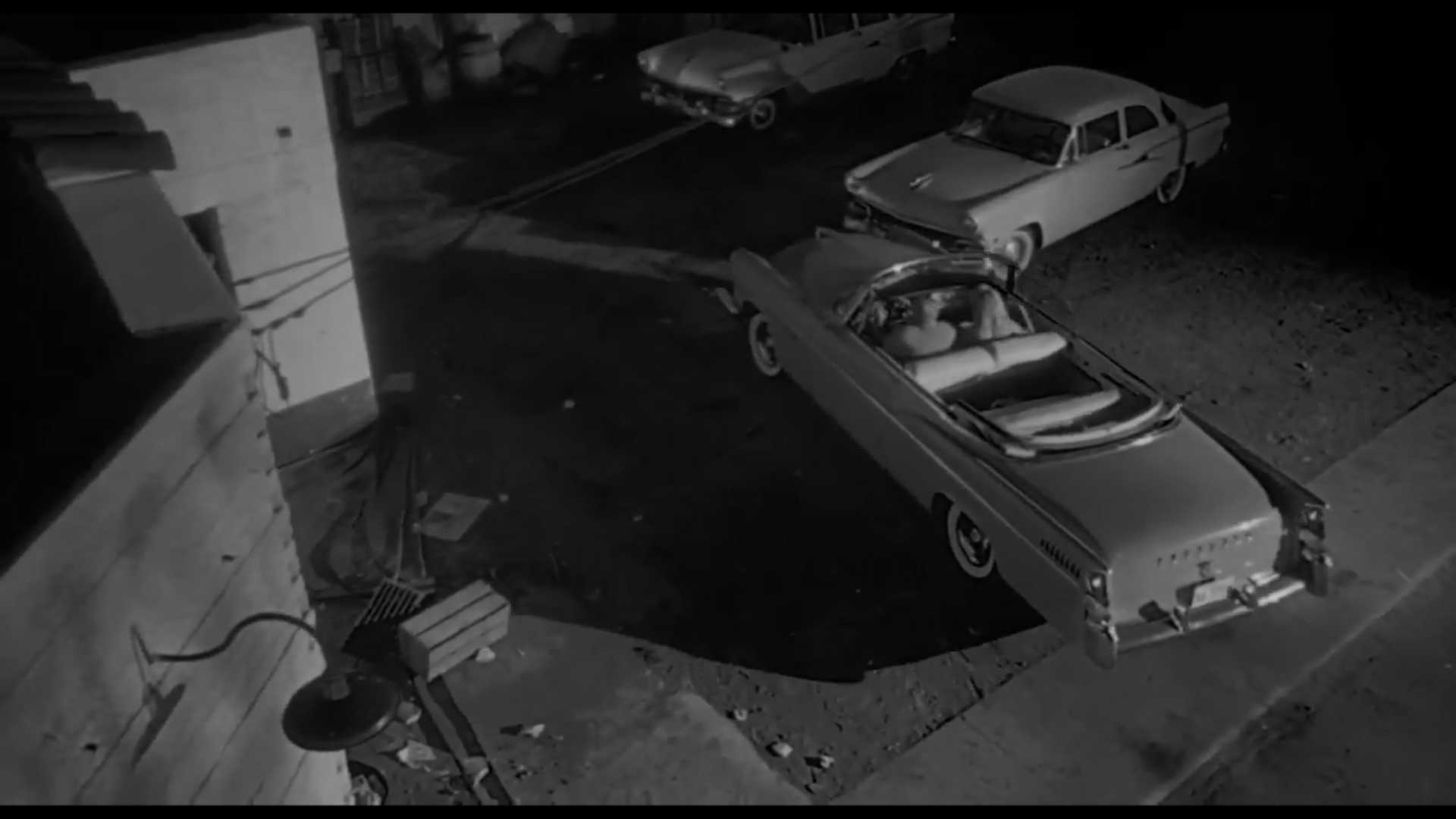
The One-Take Opening Scene in Touch of Evil
The opening scene in Touch of Evil (1958), lasting over three minutes, stands out as one of the most famous in film history.
The scene begins with a close-up of a time bomb being planted in a car. The camera, on a Chapman crane, then pulls back and follows the car through a bustling Mexican border town, all in one continuous shot.
The blocking in this sequence is incredible, with actors and extras moving through the frame with precise timing. Every element in the scene, from the car to pedestrians to the background, is meticulously choreographed.
The fluid camera movement really works on our subconscious. Even though we don’t know what’s coming at the end of the scene it does keep us hooked.
By foregoing traditional cuts, Orson Welles creates a continuous, uninterrupted flow of action that draws the viewer into the world of the story. We feel like we are part of the unfolding drama.
High angles create a sense of vulnerability or danger, while low angles make characters appear more imposing or threatening. Welles’ strategic use of angles helps to convey the shifting power dynamics that are central to the film’s story.
The opening scene stands as one of the most iconic examples of long-take blocking and movmeent. Touch of Evil continues to influence filmmakers today, reaffirming Orson Welles’ legacy as one of the greatest film directors in the history of cinema.
Some important notes about Orson Welles’ directorial style
- Orson Welles is the granddaddy of long takes. He brings it out for the most important scenes.
- He believed a good one-take shot is one that is hidden from view.
- Orson Welles was a legend in the theatre and radio world. And, he was an absolute master of his own body, voice and performance. Without this prerequisite he wouldn’t have been able to act and direct as well as he did.
- He loved to innovate, and loved watching commercials and music videos for novelties in film techniques.
- He rehearsed with his actors, for as long as the production allowed. He always considered actors to be the most important element of a production. He felt the job of directors was overestimated.
- He stayed up from 11pm to 4am or 5am in the morning with an assistant, decorating the sets with pinups and signs that he created himself. He had experience with art direction in his plays. He took meticulous care of the details.
- A quote: “Whatever the audience is aware of is your failure as a director”.
If you liked this, don’t forget to watch Orson Welles’ 7 Secrets of Cinematic Composition:

Great gift. Thanks a lot.