

What is a shot list?
A shot list is the entire list of shots for your film.
What is a cinematography shot list?
A cinematography shot list focuses on the camera angles, movement and number of shots. It helps you not waste time shooting unnecessary angles or action, and on any film set time is money.
In this video I’ll show you how a cinematography shot list is made quickly:

Why make a shot list?
One of the big responsibilities of creating a shot list is to ensure you have adequate coverage.
Coverage is basically making sure all the action and dialogue is actually captured on camera. You don’t want to go back to the editing room and realize you forgot to record something important.
How do you ensure you get good coverage?
There’s the Hollywood system, where every scene, whether or not it needs it, is covered in a master, which is usually a long shot, then a mid shot, then close ups, then over the shoulder shots of both actors. By this point low budget filmmakers have already run out of money covering the first scene!
The more economical and rational way to cover a scene is to just film what is required.
And how much coverage is required? The minimum is one. You shoot every bit of action and dialogue in just one angle. There are no alternative shots to fall back on. Film scenes shot in single takes are a great example of this. It works or it doesn’t work, there’s no way to fix it in editing.
But this isn’t coverage. Coverage is supposed to be insurance.
Two is better than one
The next best thing, after one, is two. The minimum recommended coverage is the definition of coverage. You cover every line of dialogue and every bit of action two times.
Who’s the most important character in this scene?
For simplicity let’s assume it’s a person. This person gets the greatest number of shots. It isn’t always the lead character. In some scenes other characters (or things) are more important.
Then you need to decide whatever it is that they are saying or doing is worth keeping together or breaking apart. E.g., if they are making a speech, do you want to record everything from one angle, or do you want it from different angles? Or, if it’s an action, is a change of angle necessary during some parts of it? This is something only you can do.
If you’ve done the preceding steps you’ve already come a long way. You go over this scene by scene, action by action, dialogue by dialogue, and a lot of uncertainty will be washed away.
Use a colored marker on your script if you want. Some people like to use paper, others like working on software. Pick whatever works for you. I use Fade In, the free version lets you write and share scripts with a watermark.
The one question you must ask of every line in your script
One great question you must ask of every line in your script is – does this add new information or advance the story in any way?
There are scenes where neither happens, and there’s no reason why you can’t have those kinds in your film. But it’s a gut thing, you must strongly feel about these scenes.
However, when you’re on the fence, you ask whether the line is good enough to keep, and whether it actually contributes to your film? This way you can eliminate the unnecessary and you’re left with the slimmest and most economical version of your script.
I have a whole system of going through a scene and figuring out the main points, I call it the tunnel technique and it’s available in detail in the Ultimate Guide to Shooting Dialogue Scenes.
An example of an economical shot list
Let’s take a simple scene and try to do all this. I’m going to be using the game scene from The Sixth Sense. It’s a great scene that has you riveted, and it’s basically just dialogue between two people.
The script is three pages long. In the Hollywood system that’s three minutes of screen time. One page per minute.
In the actual film the scene is almost five minutes long. They didn’t add anything. In fact, they took stuff away. But the pacing works great because it’s such a suspenseful moment.
Who is the most important person in the scene? It’s obviously Cole. We want to know what he’s going to do or say.
The second step is to go over the scene and remove anything not contributing to making it work. In the screenplay I’ve downloaded, the authenticity of which I have no way of knowing, the scene starts with a description of the den, but that’s not in the film.
Malcolm is sitting in one place, and Cole walks forwards and backwards. Should this action be covered in one angle, or more?
The dialogue between them is calm and understated. No melodrama. Should the dialogue be shot in different angles or one? Director M. Night Shyamalan decided to cover it from different angles.
The first shot establishes the geometry, so we know where both of them are in relation to each other:

Then we cut to a close up of Cole first, we want to see his reaction. He steps forward, but he’s obviously not happy to see Malcolm.
We cut back to Malcolm’s ingratiating smile, in a medium shot, and we cut back and forth between the two for a full minute.


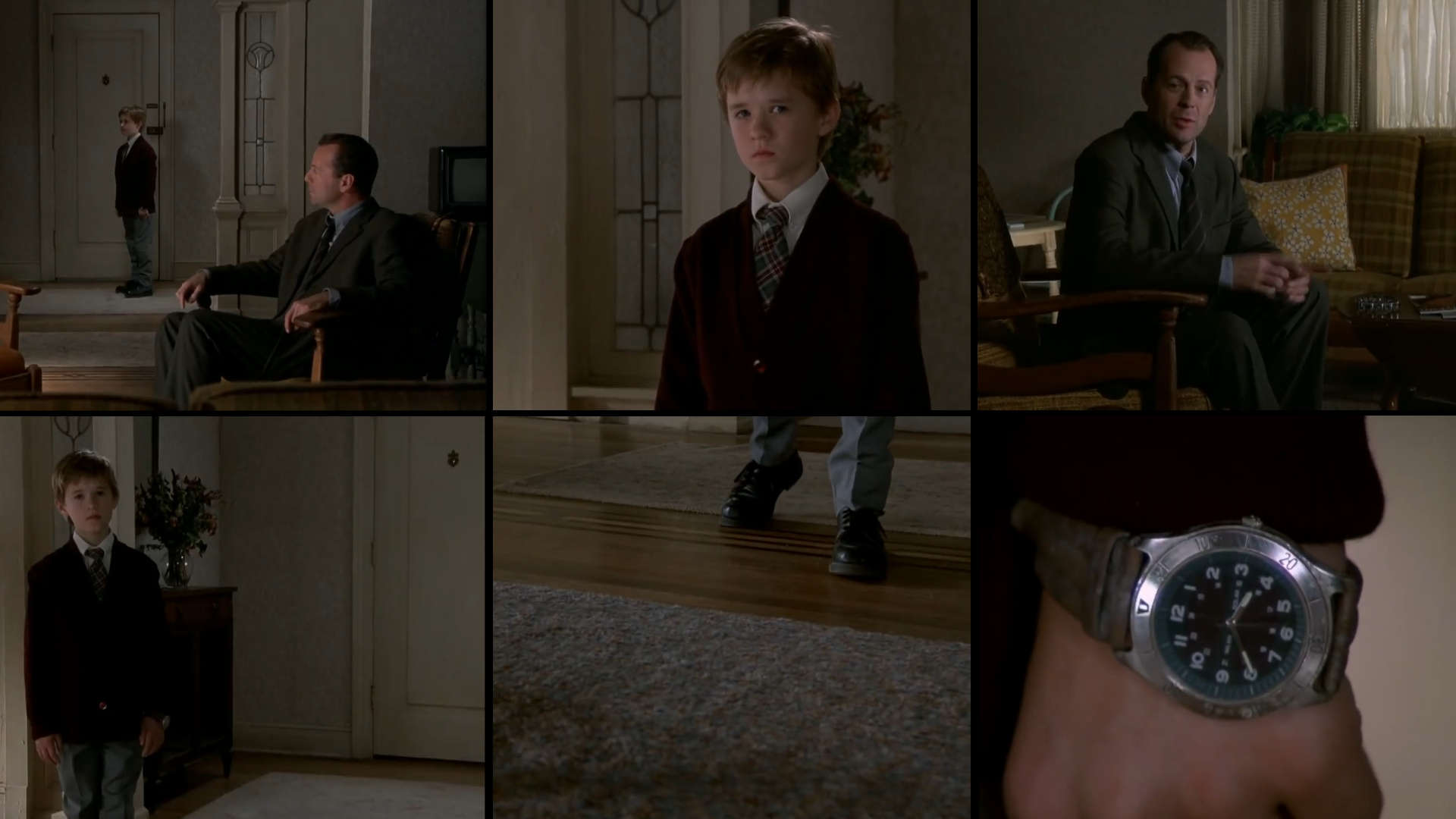
Notice the shot sizes don’t change. So far we’ve only had three shots. After Malcolm asks the first question Cole takes a step forward. This time we have a shot of his legs.
The second time Cole takes a step forward we move to a Medium Close Up. When we cut back to Malcolm his shot size has changed as well. At the beginning of the scene they had no connection, now they do, which is why it’s an important moment to change the shot size:


However, I think this shot was accomplished on a dolly, so the camera dollied forward. After the third step forward the shot gets even closer. When Malcom gets his first wrong statement, Cole takes a step back, and we can see the camera dolly back.
Cole reaches the door, and we are finally back to the original medium shot sizes. It’s at this point, when we realize Malcolm has lost, that the shot changes again to a mid wide shot of Cole.
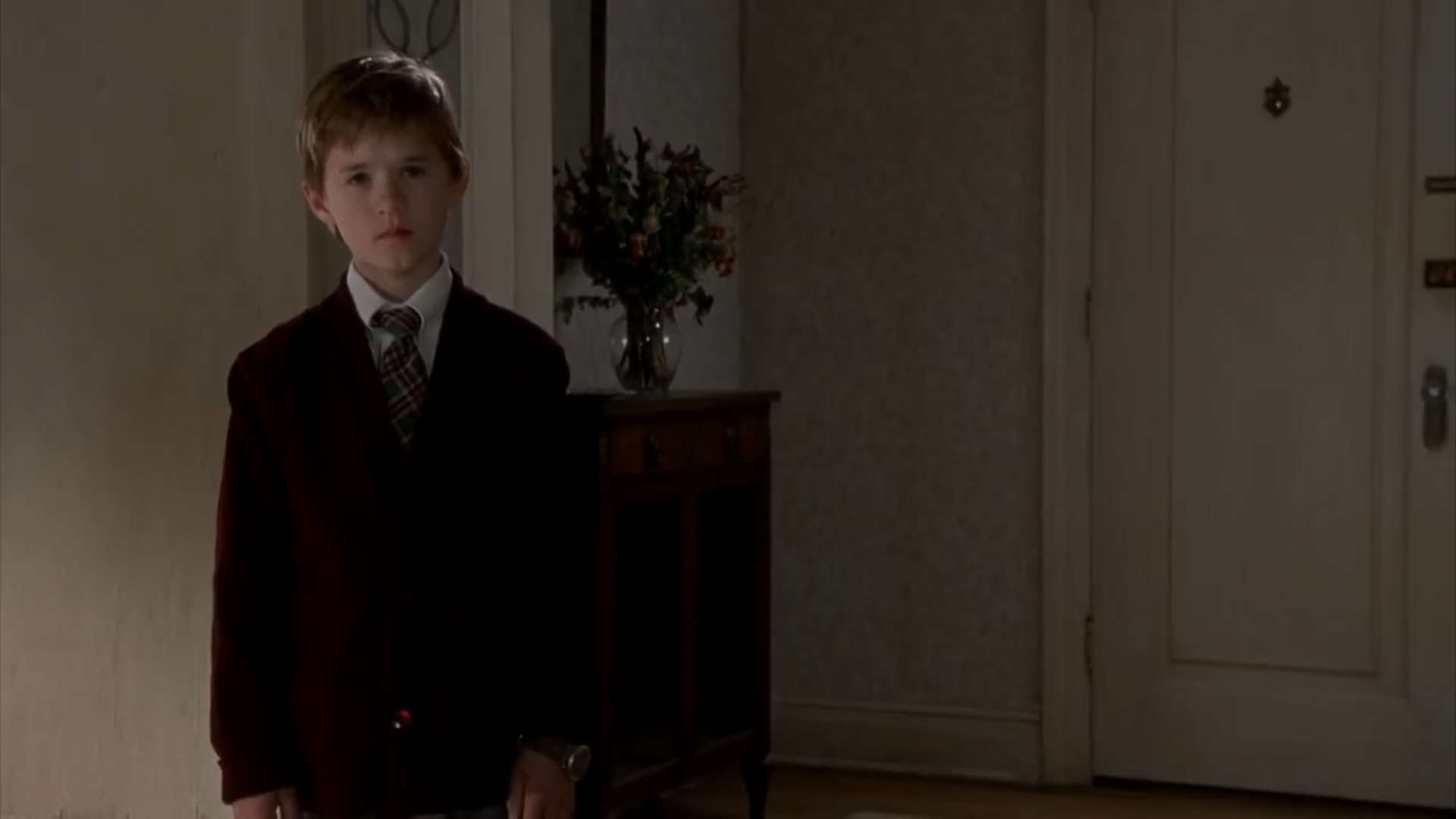
He seems more distant than before, and the connection is broken. Compare it to the earlier shot:
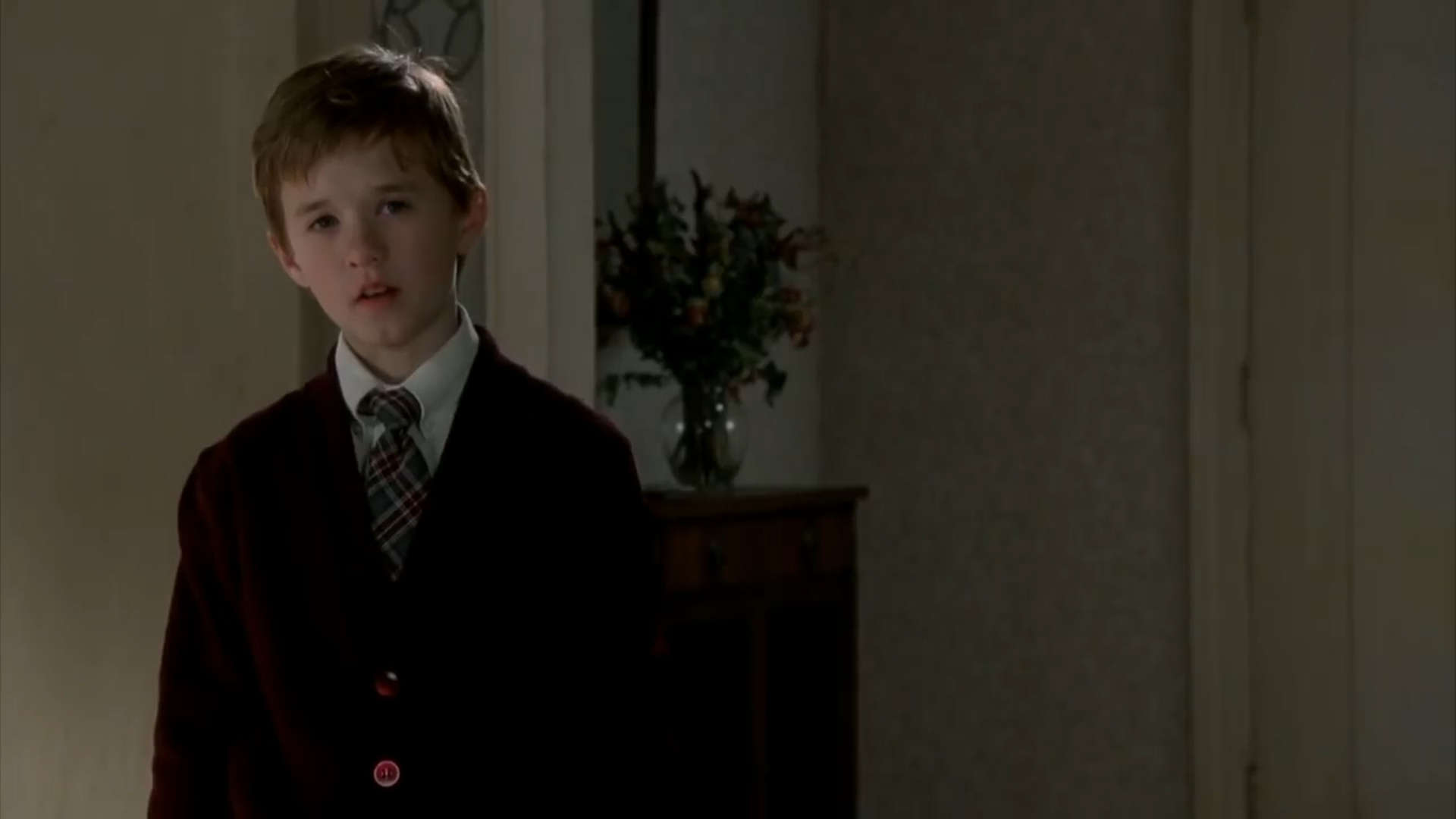
In this scene Cole has four more shots to Malcolm, and these four extra shots are of his legs:

There’s also one of his watch but that balances out with a shot of Malcolm. The most important character gets the most shots.
The back and forth is literally cut in camera that way, and in this entire scene the total number of shots is only 6. No unnecessary angles or wastage:
And that’s how you make a cinematography shot list quickly. You start by not wasting energy on shots you don’t need.
I hope you liked this video and essay. Now read this:

I really like your lessons
Thank you!