
One of the great Andrei Tarkovsky’s signature camera techniques was the top angle camera glide. He made so many variations of this, all beautiful, and can rightfully claim to be the undisputed champion of the shot.
In this video I breakdown his secret techniques to make the cinematic glide work.

How Andrei Tarkovsky Puts Us Under a Spell
Some directors tell stories with big moments and loud drama. Andrei Tarkovsky does something different. He shows you how time feels when you slow it down. His films ask you to drift with them, not just watch them.
Tarkovsky’s gift is to hypnotize you. He does it with what I call the cinematic glide. The term is simple. It means the camera doesn’t just record – it floats. It moves with purpose and carries your mind along with it.
But the glide is not just about how the camera moves. It’s about how Tarkovsky tells a story without telling you what to think. He makes you notice things you would miss in a faster film.
That’s because your brain works!
A Different Kind of Story
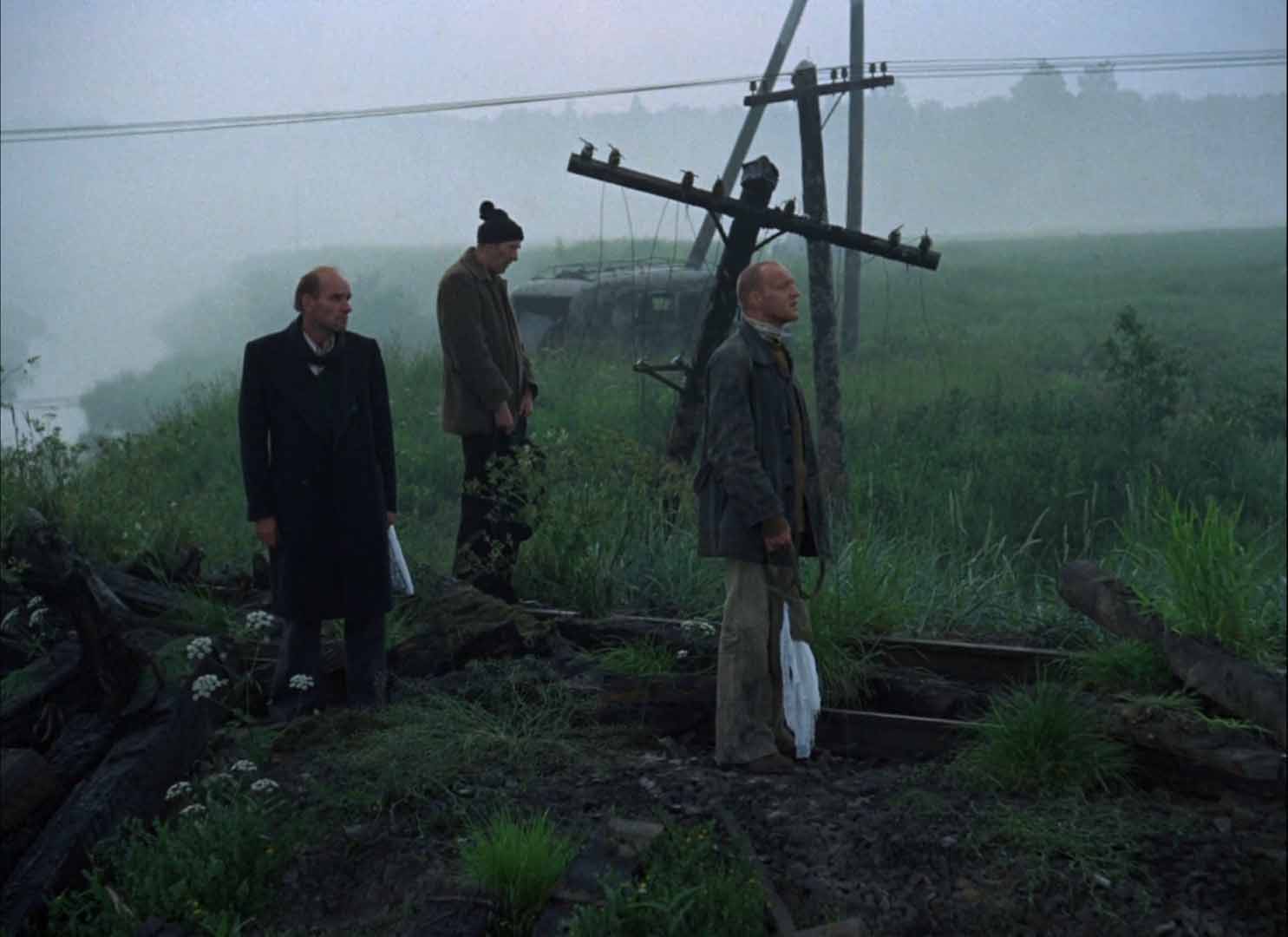
Take his film Stalker. The plot is simple enough: three men sneak into a hidden place called the Zone. Inside the Zone is a room that might grant you your deepest wish. But the truth is, the story hardly matters. Tarkovsky cares less about whether the wish comes true and more about how the journey changes you.
Tarkovsky wants you to wonder why things feel the way they do. He slows down time so your thoughts can wander. He uses sound (like the hum of a train) to pull you deeper. He circles back to images so you see them fresh, again and again.
In Stalker, the glide isn’t just in a single shot, it’s built into the whole story. We start in a drab, everyday world. The family life is bleak. There’s tension under the surface. A train rattles by outside. Something about that train feels important. It feels like a symbol of escape or of the danger that comes with leaving the safe, known world.
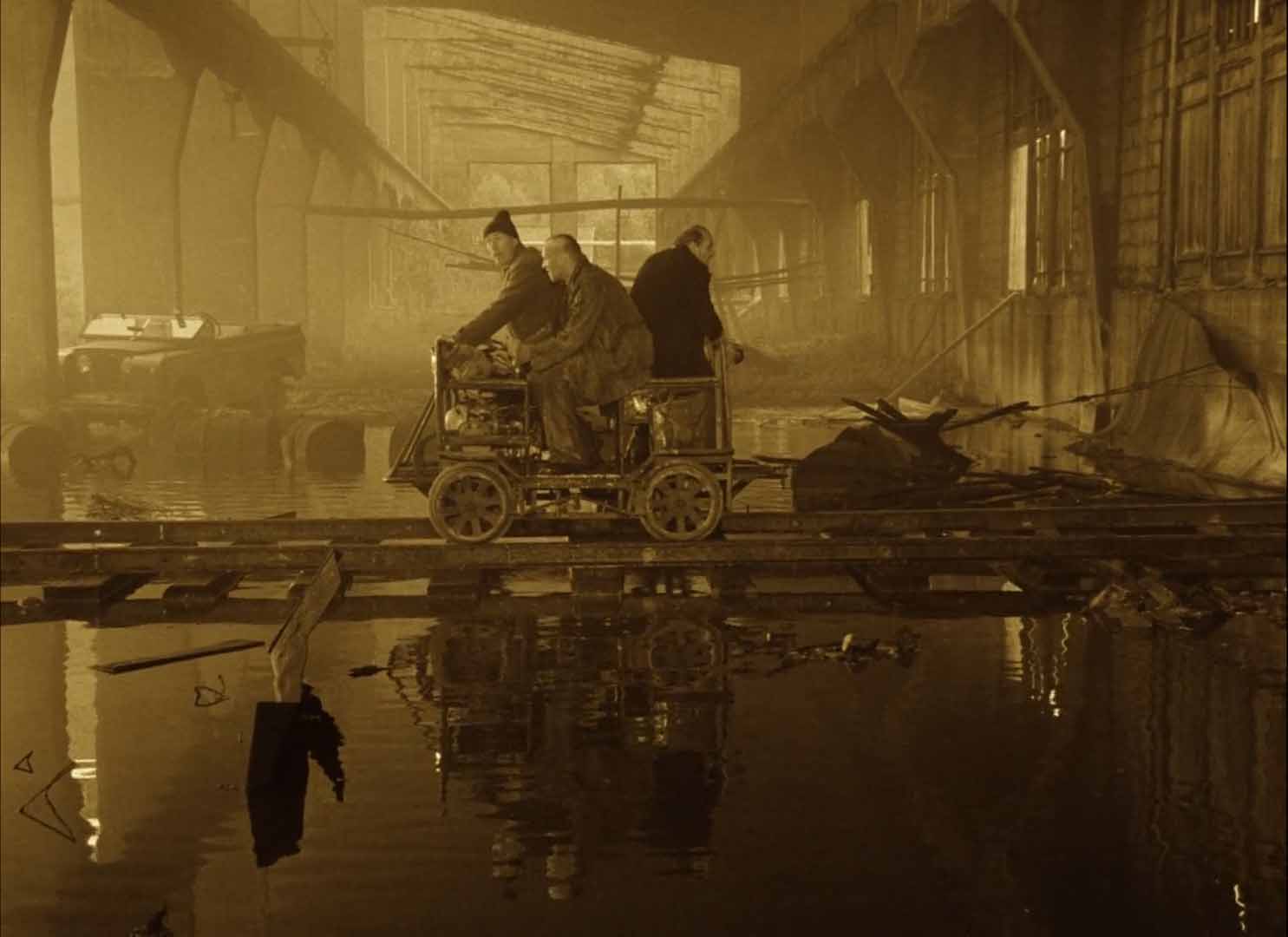
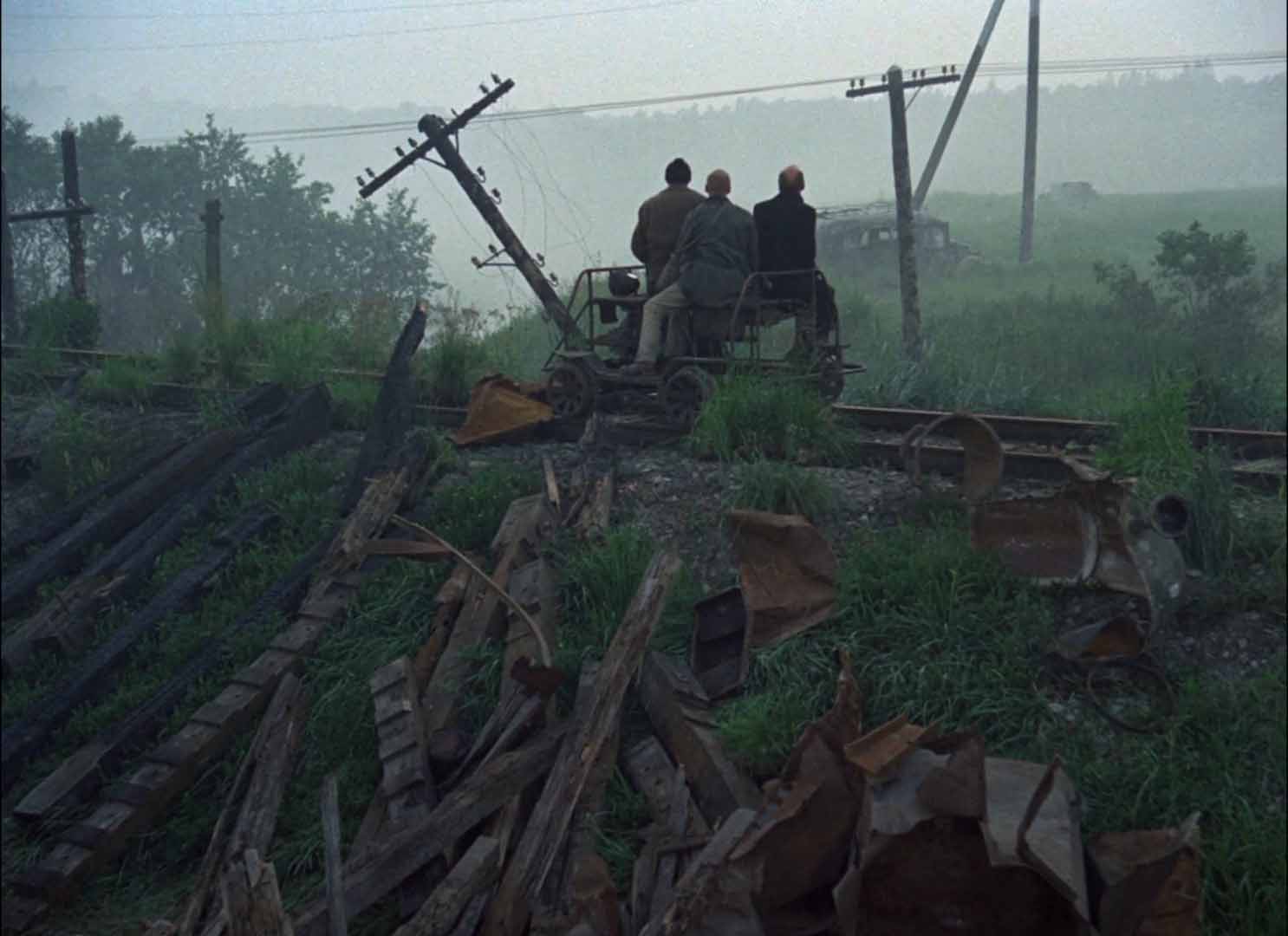
The men break into the Zone. They ride in on an old railway cart. The ride is slow, steady, almost musical. The clatter of the wheels becomes a kind of heartbeat. They are moving forward, but the rhythm of the ride makes it feel like time is standing still.
When they arrive, the world changes. The Zone feels alive. It’s a place that tests your mind more than your body. Inside it, the usual rules don’t matter. A moment of silence means more than pages of dialogue.
By the end, they return home. And that rattling train is still there. The daughter sits at the table. A glass on the table moves by itself – or maybe it’s the passing train again. Tarkovsky never answers outright.
He wants you to hold the question in your mind.
Always Something New
One reason Tarkovsky’s long takes never feel empty is because they always bring something new. He gives you details bit by bit. A half-eaten apple hints at illness. A mother turns away from her child. A father lies awake, troubled.
The camera turns you into a detective of tiny signs. It doesn’t spoon-feed you the answers. Tarkovsky trusts you to find them.
Sound is part of this slow reveal. In his films, the sound of water dripping or a train passing can say more than any line of dialogue.
A big reason the glide works is that Tarkovsky thinks in circles, not straight lines. A moment at the start returns at the end, but it feels different the second time. Maybe it’s because it’s you who has changed!
This circular style is what makes Stalker so haunting. The magic you hoped to find out there might have been inside you all along.
The Trance
The real trick behind Tarkovsky’s glide is how it puts you under a spell. He layers sound and image so your sense of time softens. He mixes real noises like the clatter of the railway car with synth and natural music that grows from it.
Soon, you don’t know where one ends and the other begins.
The railway ride into the Zone is a perfect example. The characters sit on a flat cart, rolling forward for what feels like forever. The track hums. The scenery slides by. A distant synth tone creeps in, replacing the steady clatter. It’s a lullaby and a warning all at once. By the time they reach the Zone, you feel you’ve left the normal world too.
If you watch Stalker just for plot, you’ll get frustrated. But if you let the glide do its work, you find yourself seeing in a new way. You start to look at ordinary things – a glass, a train, a man sitting awake at night – and feel the hidden weight they carry.
Tarkovsky believed film should be like poetry. He once said that if he could have made films without words, he would have. He trusted the image and sound more than any line of dialogue. That’s why so many people who love his movies forget the conversations but remember how they felt.
I’m one of those people. I’ve read what Tarkovsky wrote about his work, and sometimes his ideas frustrate me. But the images never do. They’re too powerful. I return to them the way you revisit a memory you can’t quite explain.
So what does the cinematic glide teach us? That film can be more than story. It can be a state of mind. It can make time stretch and fold back on itself.
